

Aluminum foam in series production: from panels to 3D shaped elements
Havel metal foam develops and produces aluminum foam and aluminum foam sandwiches in series production, under the Havel Lite® brand, using a manufacturing technology originally developed together with the Fraunhofer Institute for Machine Tools and Forming Technology IWU and considerably advanced in-house since. Havel metal foam produces four different aluminum foam technologies in series production: panels, sandwiches, foamed components and 3D shaped elements.
Updated:
Why aluminum foam?
With a density from 0.5 g/cm³, aluminum foam is lighter than water and still a stable, metallic material. A panel measuring 1,000 × 1,000 × 10 mm³ weighs about 11 kg as an aluminum foam sandwich AAS 10-1-1 (1 mm aluminum cover layers, foam core 0.7 g/cm³); in steel it weighs 78.5 kg. It also offers energy absorption, sound insulation, non-flammability (purely metallic, without adhesives) and 100 % recyclability. That makes it the defining material for lightweight structures in which weight, safety and cost efficiency all count at once.
What does Havel metal foam produce?
The Havel Lite® product range covers four product forms made in series, from the flat panel to the ready-to-install 3D shaped element. Sandwiches are available with aluminum cover layers (AAS) or steel cover layers (SAS), in each case metallically bonded, without adhesives.
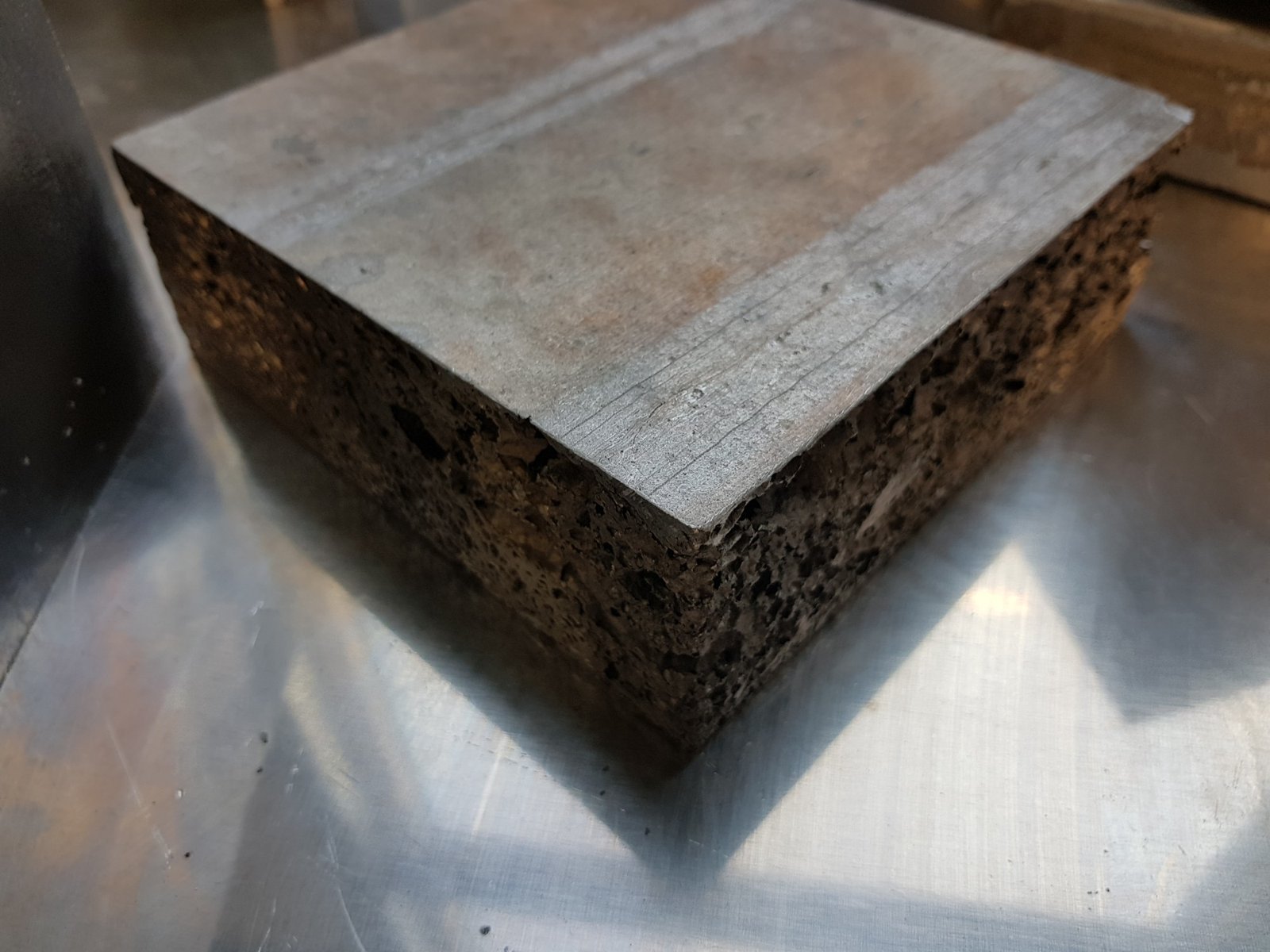
Aluminum foam panels
flat foam without cover layers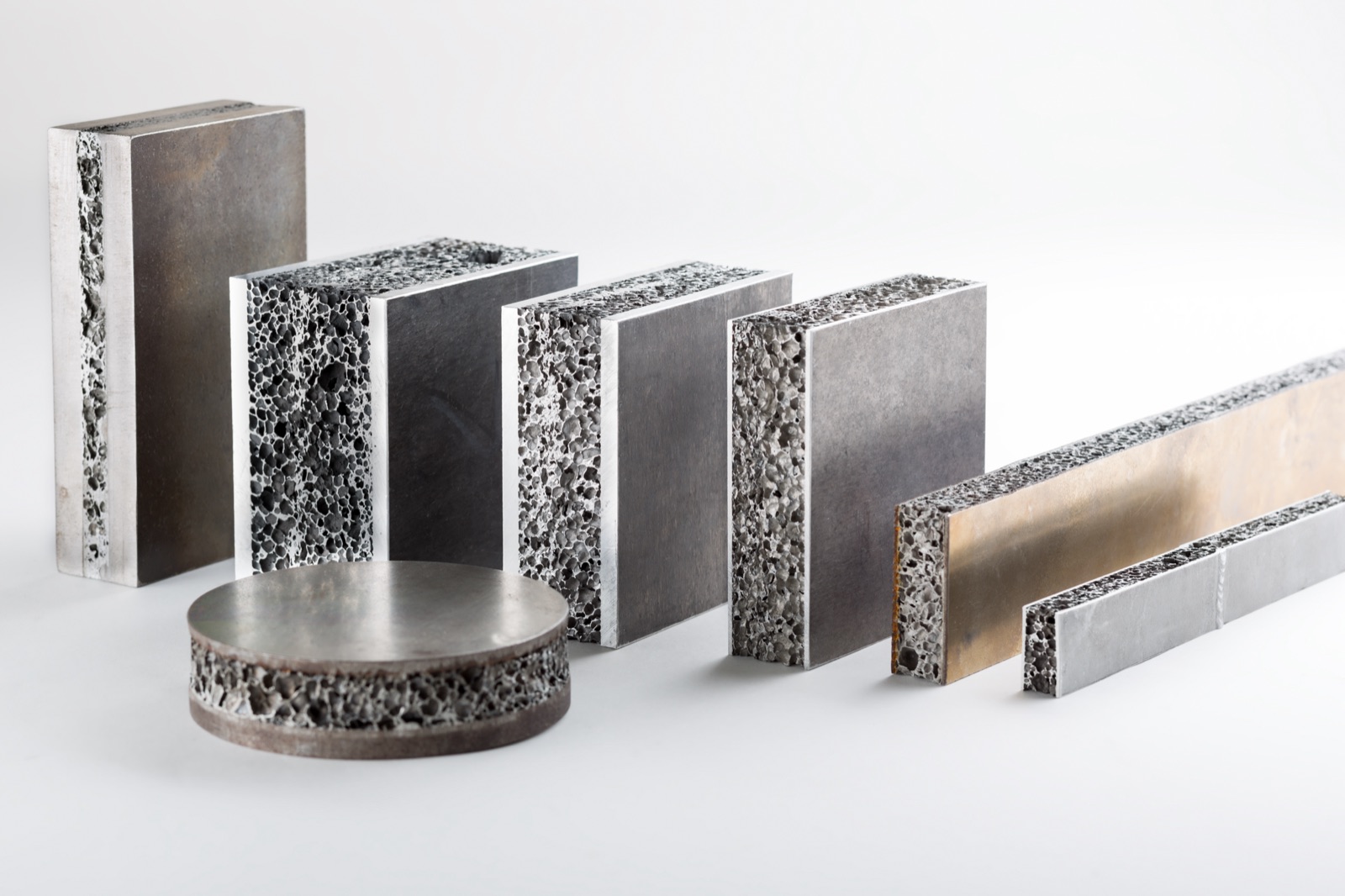
Aluminum foam sandwiches
Havel Lite® AAS (aluminum cover layers) and SAS (steel cover layers)Photo: Tobias Phieler, lichtzelt fotografie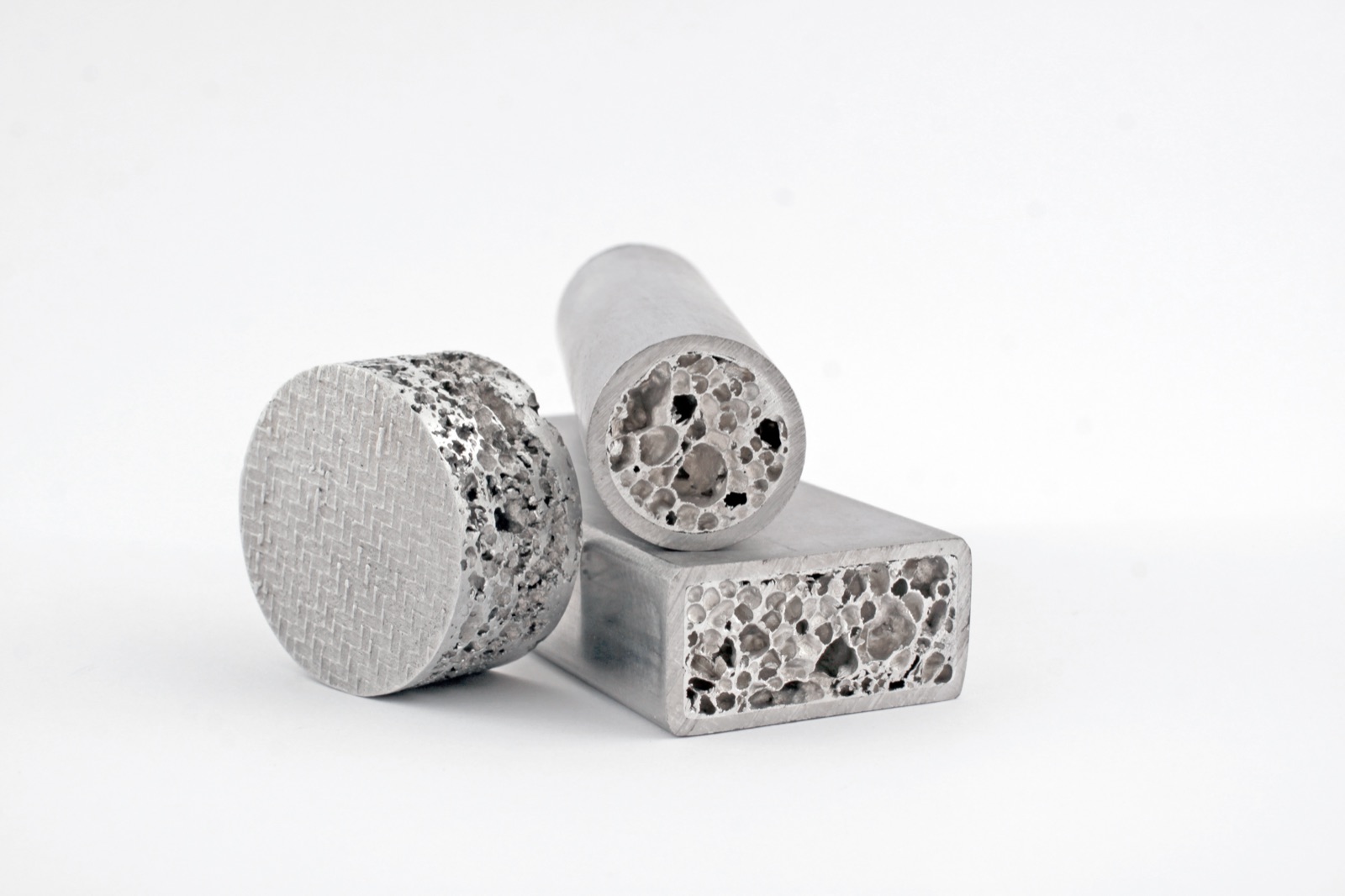
Foamed components
cavities foamed directlyPhoto: Ivonne Schiller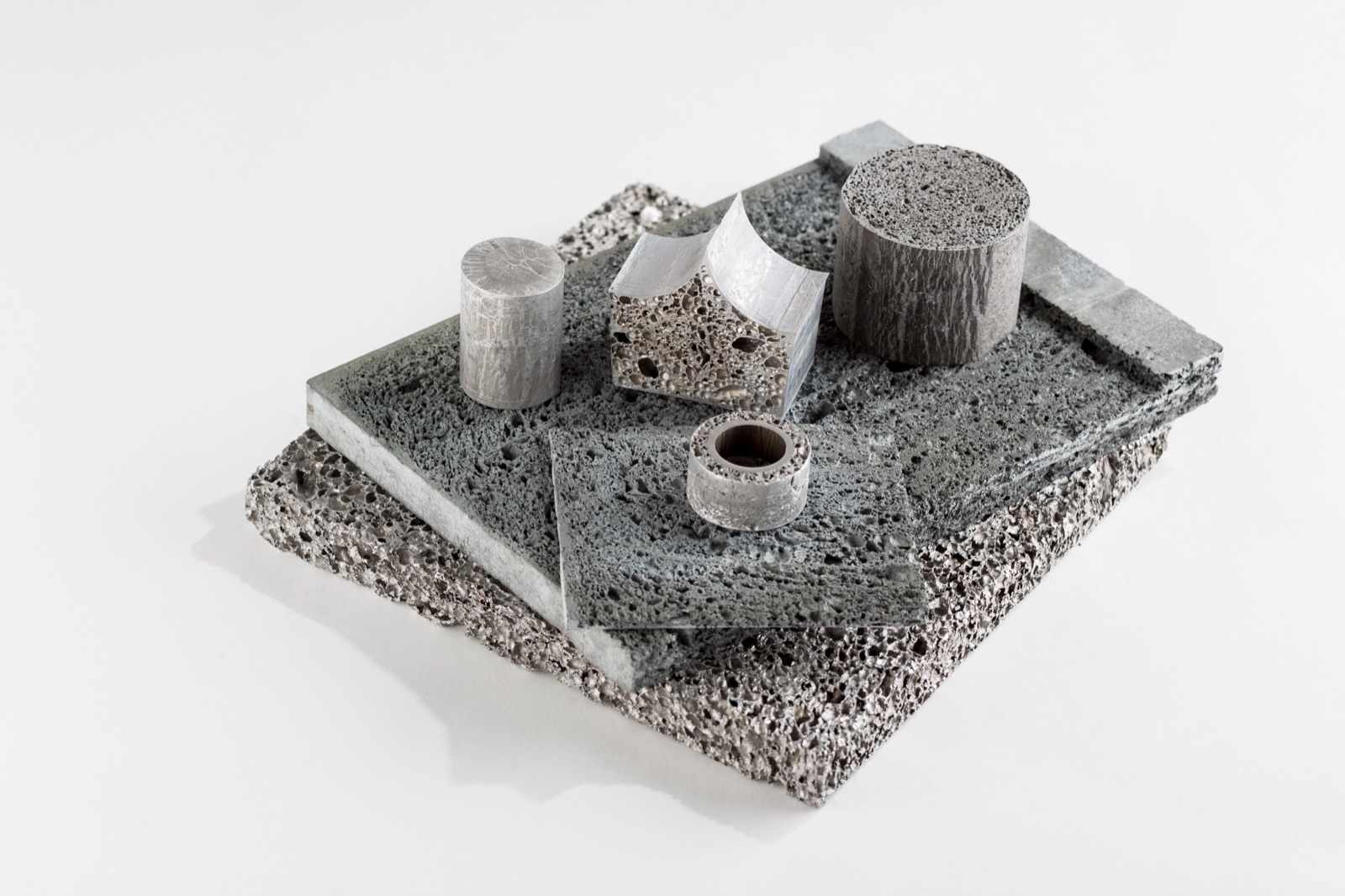
3D shaped elements
three-dimensionally shaped foam elementsPhoto: Tobias Phieler, lichtzelt fotografie
Your project, our material
Describe your project; a specialist will reply.
- Prompt reply
- No account needed
- Your data stays confidential
Which industries can aluminum foam be used in?
Aluminum foam can be used on water, in the air and on land: wherever high but cost-effective demands are placed on the material and weight reduction optimizes the energy factor. Havel metal foam supplies industry solutions for ten sectors: automotive, railway industry, shipbuilding, inland shipping, aviation, mechanical engineering, wind energy, defense, architecture and drones, from the battery box for electric vehicles to certified underrun protection for trucks.
Which services does Havel metal foam offer?
Havel metal foam supports projects from drawing to series production: development, design and manufacturing from a single source.
- Research & development
- FEM calculations
- Product solutions
- Series production
- Processing
Understanding the material
Is metal foam the same as aluminum foam?
Also asked: Which metal foams are produced? · How are metal foam, aluminum foam and zinc foam related?
No, metal foam is the umbrella term. Havel metal foam produces two of them: aluminum foam, on which the whole range is built, and zinc foam, an option where particularly thin outer walls of profiles and tubes are needed. Havel metal foam's aluminum foam is also always closed-cell and foamed by powder metallurgy, which distinguishes it from open-cell foams made by the melt route. The terms are mixed up in the market; anyone comparing values should therefore check the cell structure and the production route first, not just the name.
- Sources
- Brand content
How does this aluminum foam differ from that of other suppliers?
Also asked: What is the difference from the melt route? · Why not an open-cell foam?
The difference begins with the production route. Havel metal foam foams a solid precursor and obtains closed cells in an alloy of about 90 % aluminum and 10 % silicon, while the suppliers using the melt route deliver open-cell foam in AA.1070. From this follow four capabilities that the company's own technology comparison, set against five suppliers named in it, identifies: the sandwich without adhesive, three-dimensional shaped foam elements, foamed tubes and profiles, and shaped 3D sandwiches. Closed cells are also the reason why no corrosion starts inside the material.
- Sources
- Brand content
Selection
When is aluminum foam not the right choice?
Also asked: Where are the limits of the material? · When is sheet metal the better solution?
The aluminum foam from Havel metal foam is built for compression, energy absorption and damping, not for tension: as pure foam it reaches a tensile strength of 4 to 6.3 N/mm², so the tension side of a component belongs in a cover layer, or another material makes more sense. Where component cost alone decides and weight, damping and fire behavior play no part, steel sheet remains the cheaper solution. And where a particular certificate is required, it has to be checked beforehand whether it exists: for aviation and for ballistic requirements there is none. The material pays off when several properties are needed at the same time.
- Sources
- Brand content
Is aluminum foam a series production material?
Also asked: Is it a research material or a series production material? · Is the material available in series production? · Is it a prototype material?
Yes. Havel metal foam produces four aluminum foam technologies in series, including larger quantities with reproducible product quality, and makes the foamable precursor for them in-house. The material has been produced industrially, not in the laboratory, since the company was founded in 2013. What differs from component to component is how far the particular geometry has progressed: a new part starts as a drawing part or prototype and grows through a pilot series into series production, and the stage a particular product has reached should go in the inquiry.
- Sources
- Brand content
Getting started
Is an inquiry possible without a finished drawing?
Also asked: What does the specialist team need for an initial assessment? · Can feasibility be clarified in advance?
Yes. Besides manufacturing, Havel metal foam also covers development, design and calculation, so an inquiry can start with the load case instead of a drawing. For an initial assessment, what the component has to do, the property required and the rough quantity are enough. From there, two routes lead on: a calculation, for which validated material cards for three crash solvers are available, or a sample build, which lets you assess the material in your own application rather than from the data sheet.
- Sources
- Brand content
Which page answers which question?
Also asked: Where can I find the material values? · How is the site structured?
The Havel metal foam site covers four starting points. Figures on the material, that is, density, strength, thermal conductivity and tolerances, are under Material values. The Products page, with the four forms made in series production, shows which product form suits a task. Whether there are worked-out applications for your own industry is under Industry solutions. And how the material is made, with which equipment and which test partners, is under Manufacturing, Research & development and Company.
- Sources
- Brand content
Your project, our material
Describe your project; a specialist will reply.
- Prompt reply
- No account needed
- Your data stays confidential