
Aluminum foam panels
Havel Lite® aluminum foam panels are pure foam plates of aluminum, without cover layers, and can be produced from a height of just a few millimeters. With a steel mesh insert they have particularly high tensile strength and are less brittle. Panels are even lighter than sandwiches and at the same time less expensive than carbon fiber, for example.
Updated:
What are aluminum foam panels, and in which variants are they available?
Aluminum foam panels are pure aluminum foam plates. According to the product data sheet, they come in thicknesses of 3 to 50 mm and formats up to 1,900 × 900 mm. The foam core has densities of 0.5 to 0.8 g/cm³. The variants produced include pure aluminum foam panels with a foam skin as the outer layer, panels with inserts, panels with a steel mesh to improve tensile strength, and aluminum foam in acrylic.
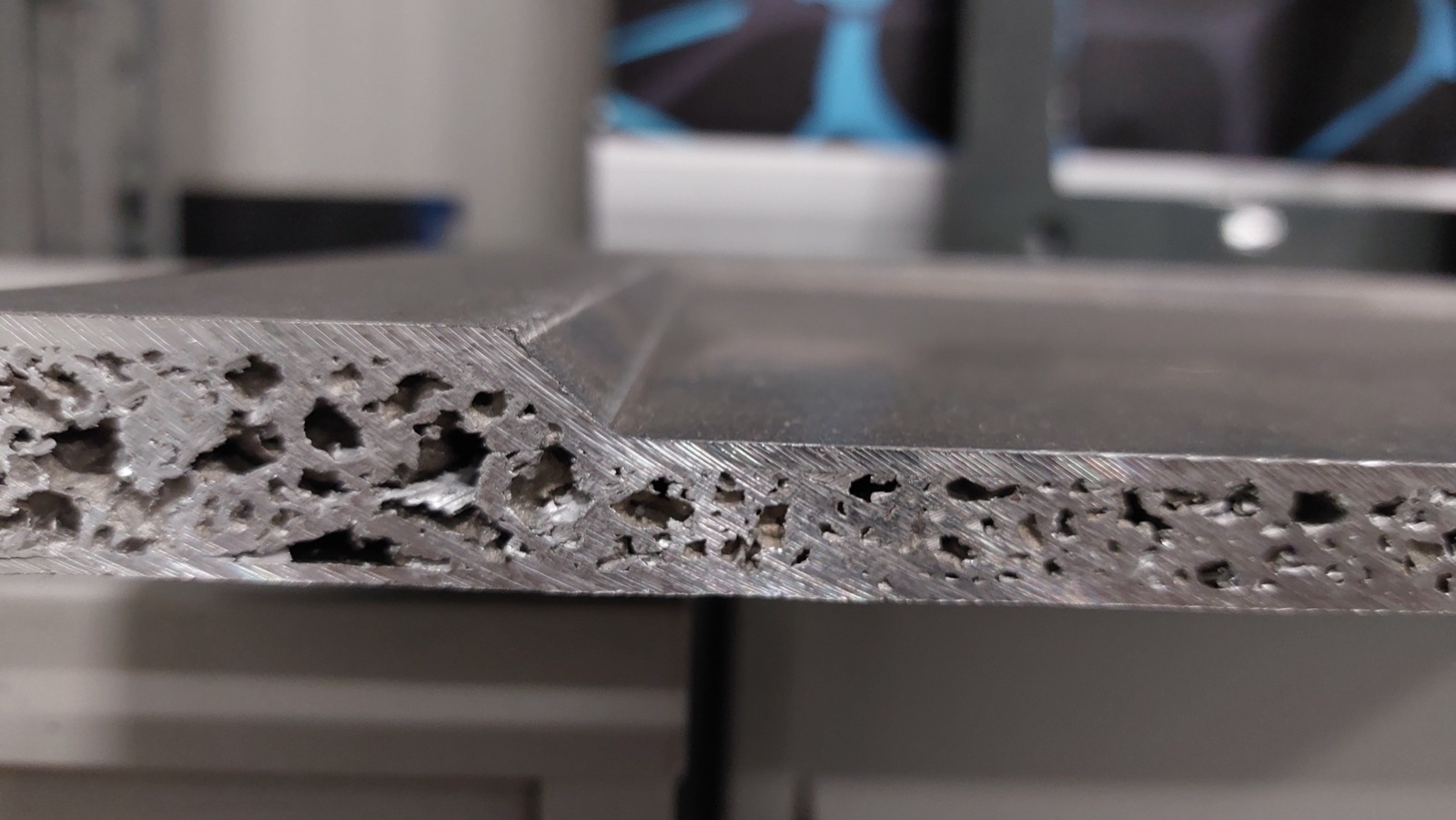
- Pure aluminum foam panels with a foam skin as the outer layer
- Pure aluminum foam panels with inserts
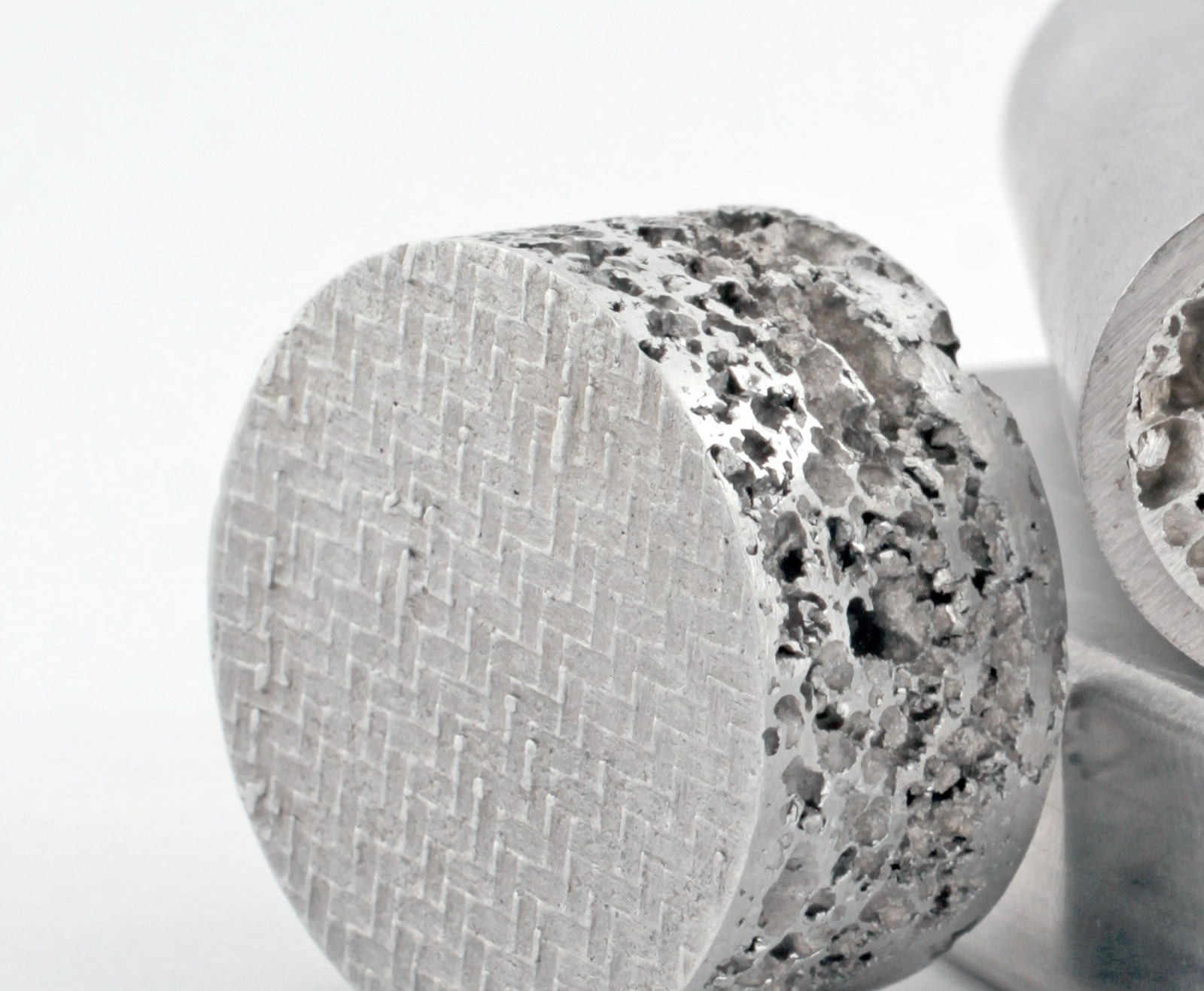
- Pure aluminum foam with steel mesh: improves the tensile strength of the foam
- Aluminum foam in acrylic
What does the steel mesh insert do in aluminum foam panels?
Aluminum foam panels with a steel mesh insert have particularly high tensile strength and are less brittle: the steel mesh improves the tensile strength of the foam. At the same time the panels remain even lighter than sandwiches and less expensive than carbon fiber, for example. The steel mesh insert is therefore the choice where pure foam plates would be too brittle but full-surface cover layers are not needed.
How much load can pure aluminum foam plates take?
The cellular structure of the foam ensures that the material withstands extreme loads, for example in energy absorption. Aluminum foam panels thus combine low weight with high load capacity, entirely without cover layers. The foam core lies in the density range of 0.5 to 0.8 g/cm³, which makes it extremely well suited to lightweight construction.
Structure and how it differs
What is an aluminum foam panel?
Also asked: What is an aluminum foam plate? · What separates a panel from a sandwich?
An aluminum foam panel from Havel metal foam is a pure foam plate of aluminum without cover layers, sold under the Havel Lite® brand. That makes it the simplest and at the same time the lightest form of the material: a sandwich gets its stiffness from two metallic cover layers around the foam core, while a panel consists of the foam alone. The product data sheet gives the alloy as AlSi10.
- Sources
- Brand content
When does a panel make more sense than a sandwich?
Also asked: Panel or sandwich? · When is a pure foam plate enough?
A panel from Havel metal foam is the choice when weight, damping or energy absorption come first and the stiffness of a cover layer is not needed. As soon as a component needs bending stiffness, the sandwich is the right design, because that is exactly what the cover layers are for. For higher tensile strength there is an intermediate option: a panel with a steel mesh insert, which is lighter than a sandwich and less expensive than carbon fiber.
- Sources
- Brand content
Dimensions and weight
In which thicknesses and formats are the panels available?
Also asked: How thin can an aluminum foam plate be? · What is the maximum plate size?
According to the product data sheet, Havel Lite® panels are available from 3 to 50 mm in thickness, with a maximum format of 1,900 × 900 mm. 3 mm is therefore the thinnest plate available; plates from 3 mm are used, among other things, to enclose battery systems, and plates from 10 to 50 mm as mobile protective walls.
- Sources
- Brand content
How much does an aluminum foam panel weigh per square meter?
Also asked: How heavy is an aluminum foam plate? · What is the weight per unit area of Havel Lite®?
A 10 mm thick Havel Lite® plate from Havel metal foam weighs 6.0 kg/m² at a foam density of 0.6 g/cm³. Because the weight per unit area follows directly from thickness and density, it can be estimated from them for other build-ups; within the available range, the density itself is part of the design.
- Sources
- Brand content
Variants and processing
What does a steel mesh insert do in the panel?
Also asked: What is the steel mesh in the aluminum foam for? · How can a panel's tensile strength be increased?
The steel mesh insert gives a Havel Lite® panel particularly high tensile strength and makes it less brittle. At Havel metal foam this variant is lighter than a sandwich and less expensive than carbon fiber, which makes it an intermediate option for components that have to take tensile forces without needing a cover layer straight away.
- Sources
- Brand content
Can fastening points be integrated into a panel?
Also asked: Can inserts be embedded in aluminum foam? · How is a panel fastened?
Yes, inserts can be embedded in pure aluminum foam panels from Havel metal foam. This is different from foaming in and welding in fastening points, rails or nuts: that is possible only in the SAS design with steel cover layers, not in a pure panel and not in AAS.
- Sources
- Brand content
Aluminum foam panels for your project
Straight to our specialist team, without going through sales.
- Prompt reply
- No account needed
- Your data stays confidential