
Metal foam 3D sandwiches
3D sandwiches from the Havel Lite® range are complex three-dimensional shapes with a metal foam core: hollow metal components are foamed to take advantage of metal foam sandwiches. The foamed components have excellent damping properties with minimal added weight; in motor vehicles the crash values are significantly improved. Before series production, a drawing part / prototype is made to the customer's requirements.
Updated:
How are metal foam 3D sandwiches made?
First the cover layers are formed; they are made of steel, aluminum, stainless steel or copper, as required. These workpieces are then foamed, and this produces 3D sandwiches. Profiles and cavities can also be foamed afterwards, with a thickness tolerance of ± 0.3 to ± 0.8 mm. Foaming affects neither the repairability nor the machinability of the elements.
What are 3D sandwiches used for?
3D sandwiches are used wherever curved or complex geometries have to combine lightweight construction with damping: from doors for rail, metro and automotive to floor panels, stair treads and cladding elements. Cooling pipes and cable ducts can also be foamed in. All drawing parts are made to customer-specific requirements.
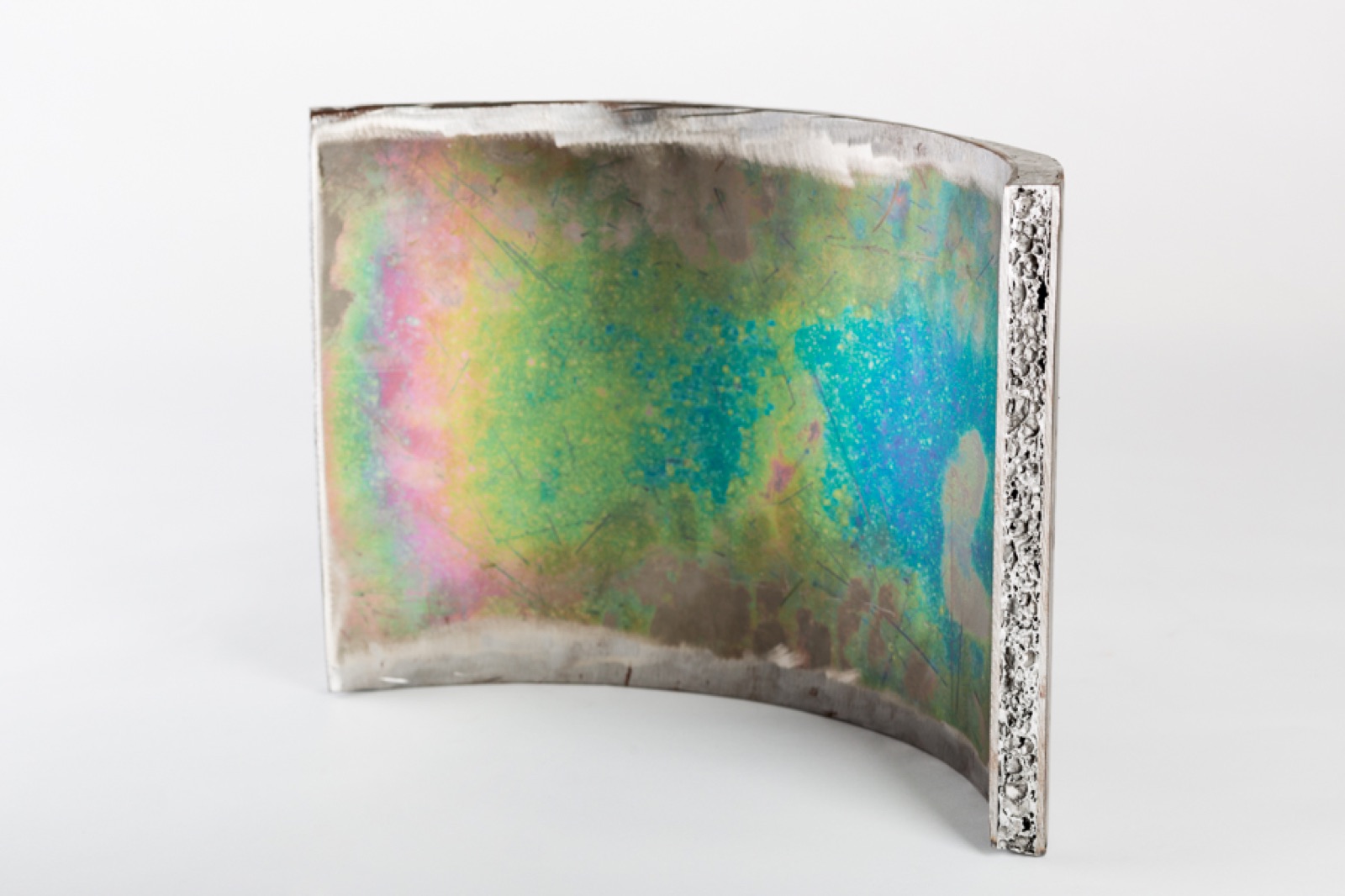
- curved elements
- foamed-in cooling pipes and cable ducts
- doors for rail, metro and automotive
- floor panels
- stair treads
- cladding elements
What are the advantages of 3D sandwiches?
3D sandwiches can be produced in three dimensions and are rigid in bending, with excellent damping properties at minimal added weight. In motor vehicles they significantly improve the crash values, tested with a crash test and a bollard test. The components remain repairable and easy to machine; production is customer-specific, from the drawing part to series production.
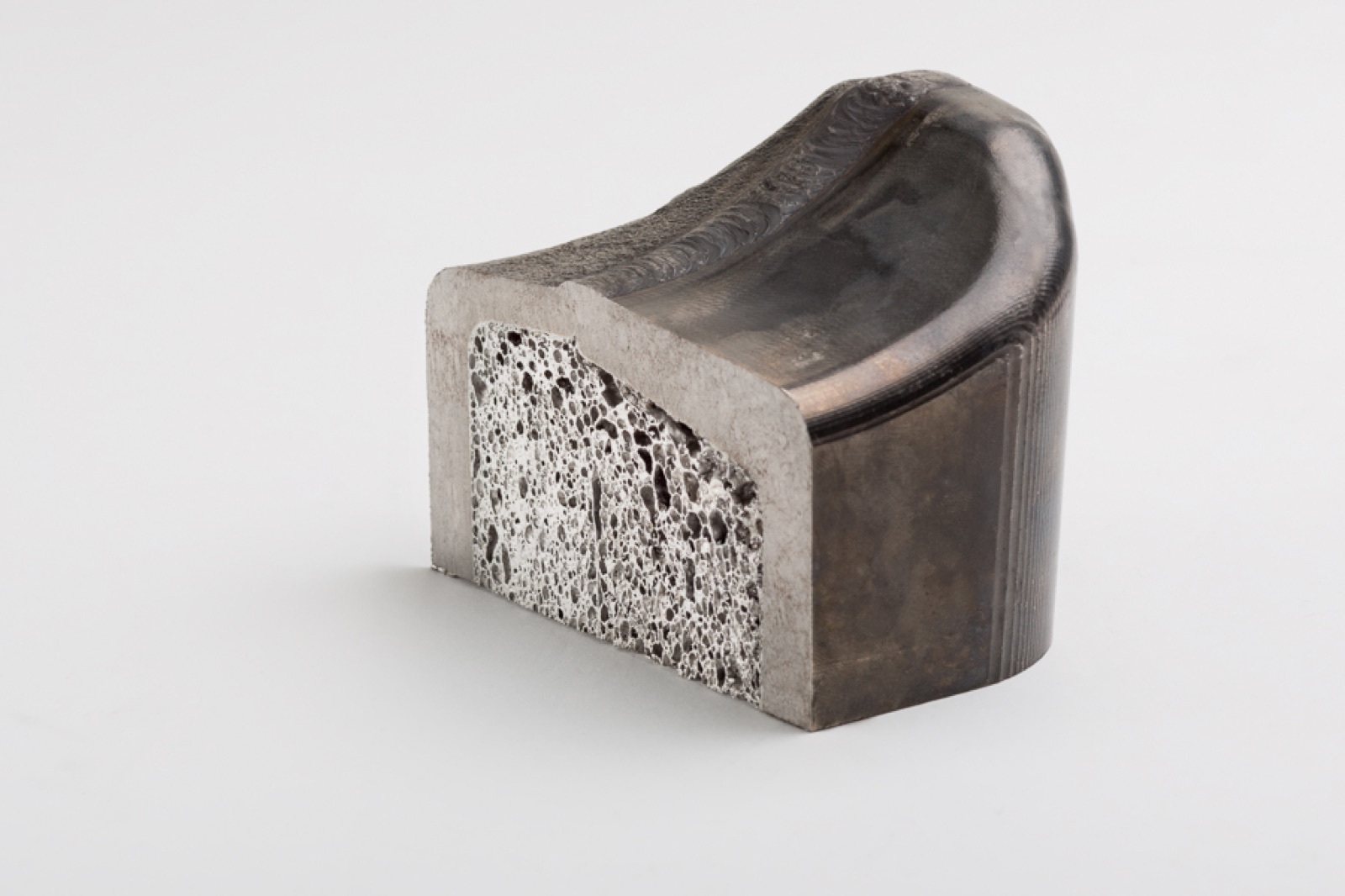
- can be produced in three dimensions
- customer-specific production, from drawing parts to series production
- excellent damping properties with minimal added weight
- improved crash values in motor vehicles (tested with crash and bollard tests)
- repairable and easy to machine
- rigid in bending
Production
What are 3D sandwiches?
Also asked: How does a 3D sandwich differ from a sandwich panel? · Can a sandwich be curved?
3D sandwiches from Havel metal foam are aluminum foam sandwiches in three-dimensional form: curved, bent, milled or welded components whose foam core is metallically bonded to the cover layers. The difference from the flat sandwich lies not in the material but in the geometry and in the order of production. This makes it possible to build load-bearing components such as doors for rail, metro and automotive, floor panels, stair treads and cladding elements, not only flat panels. Cooling pipes and cable ducts can also be foamed in with this design.
- Sources
- Brand content
How is the three-dimensional shape produced?
Also asked: Is the part shaped before or after foaming? · How are the cover layers formed?
The 3D sandwiches from Havel metal foam are produced in two steps: first the cover layers are formed, then these workpieces are foamed. Shaping therefore comes before foaming, not after it, and that is what distinguishes the sequence from that of a flat sandwich: the foam grows into the geometry that is already there and bonds metallically to the cover layer. The cover layers themselves can be welded, bent and folded by the usual methods, which is what makes shaping before foaming practical in the first place.
- Sources
- Brand content
Which materials are the cover layers made of?
Also asked: Are copper cover layers available? · Are there stainless steel cover layers?
The cover layers of the 3D sandwiches from Havel metal foam are made of steel, aluminum, stainless steel or copper. The choice follows the requirements on the component: steel cover layers give the stiffer SAS design, aluminum cover layers the lighter AAS design, and copper comes into consideration where thermal conductivity or the surface itself matters. In all four cases the core is aluminum foam, so the composite remains metallically bonded and needs no adhesive.
- Sources
- Brand content
Processing and functional integration
Does a foamed component remain repairable?
Also asked: Can a 3D sandwich be machined afterwards? · Can a damaged element be repaired?
Yes. With the 3D sandwiches from Havel metal foam, foaming affects neither the repairability nor the machinability of the elements. The reason lies in the build-up: the foam core is metallically bonded to the cover layer, there is no adhesive in the composite, and so the component remains single-material and can be machined. Drilling, welding and milling are just as possible on the shaped geometry as on a flat panel, and a damaged element can be repaired rather than replaced.
- Sources
- Brand content
Can cooling pipes and cable ducts be foamed in?
Also asked: Can pipes and cables be integrated into the component? · Is functional integration possible in the sandwich?
Yes. With the 3D sandwiches from Havel metal foam, cooling pipes and cable ducts can be foamed in directly. The foam encloses the inserted pipe or duct during foaming, so that function and structure come together in one component and no additional bracket, screw fixing or guide is needed. This is used above all on doors, floor panels and cladding elements for rail, metro and automotive, where pipes and cables have to run through the panel anyway.
- Sources
- Brand content
Evidence and applications
Has the production of shaped sandwiches been demonstrated at 1:1 scale?
Also asked: Are there demonstrators? · Has the design gone beyond prototype status?
Yes. As a project result, Havel metal foam produced both large, flat sandwich elements and shaped sandwich structures, both as demonstrators at a scale of 1:1. A second result of the same work concerns the design: stiffeners that a conventional design needs could be replaced by the sandwich itself, because of its load-bearing behavior. For a design, that means it is not only sheet metal that is swapped for sandwich; stiffening structures can be dropped as well.
- Sources
- Brand content
Has the design already been used on a vehicle component?
Also asked: Is there a front module that has been built? · Where does a shaped sandwich sit in a vehicle?
Yes. The power car hood of a high-speed train was made from shaped and welded aluminum foam sandwiches from Havel metal foam, combined with GFRP components. The component shows that the design works not only for flat surfaces but also for a double-curved outer skin at full vehicle scale; it is also a hybrid of metal foam sandwich and fiber composite, not a pure sandwich component. For use in a rail vehicle, what counts is that the sandwich portion is non-combustible; material testing of AAS and SAS to DIN EN 45545-2 resulted in classification as HL3, and no certificate was applied for. The weight figures for this front module are on the railway industry page.
- Sources
- Brand content
Is a prototype made before series production?
Also asked: Are there drawing parts before series production? · How does first-article sampling work?
Yes. Before series production, Havel metal foam makes a drawing part or a prototype to the customer's requirements. For a 3D sandwich, the route therefore runs through a real component before a series starts, and with shaped geometries that is the point at which shaping, foaming and tolerances become evident on the actual geometry. We determine the minimum bending radius for a given combination of build-up and thickness on this component.
- Sources
- Brand content
How large can an aluminum foam sandwich component be?
Also asked: Can sandwich components be built beyond the size of a panel? · How are large-area sandwich components made?
Beyond the size of a single panel, Havel metal foam joins several sandwich segments and welds them together. The base plate of an electric special-purpose vehicle is made this way from three segments, around 2,900 × 1,500 mm and weighing about 80 kg, with a milled outer contour and solid aluminum inserts for threads. Havel metal foam also builds a frame for hydrogen tanks as a welded assembly, around 2,500 × 700 × 3,000 mm and about 500 kg including the attachment points to the vehicle. For the design, that means the component size depends on the joining technique and not on the format of a panel.
- Sources
- Brand content
3D sandwiches to your drawing
From prototype to series production, all under one roof.
- Prompt reply
- No account needed
- Your data stays confidential