
Havel Lite® product solutions
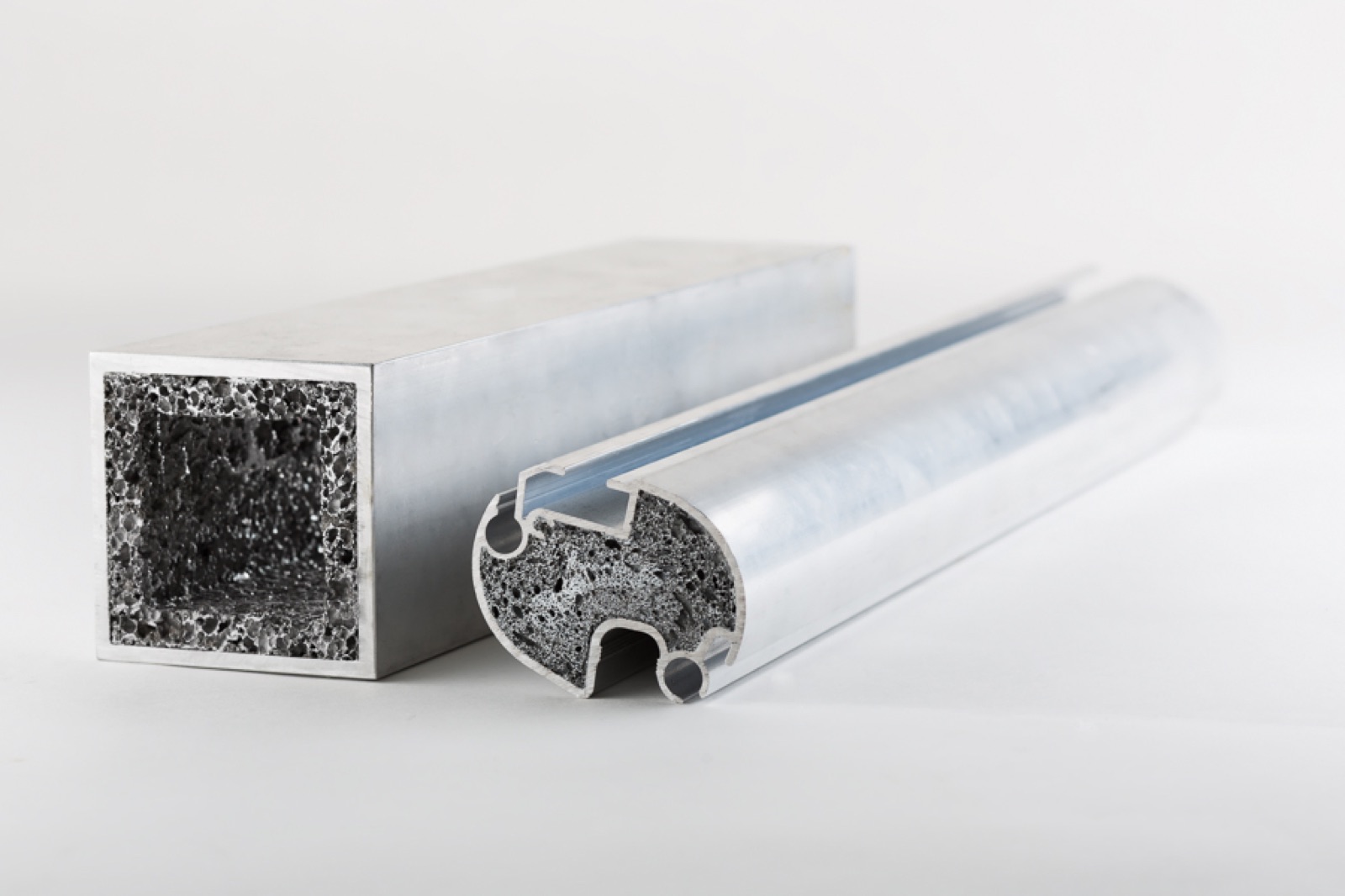
Havel Lite® is the product series of Havel metal foam for lightweight construction in aluminum foam: four product forms in series production, namely sandwiches with steel or aluminum cover layers (SAS and AAS), aluminum foam panels, foamed components and 3D shaped elements. At the core of every Havel Lite® product is the extremely light and particularly stable aluminum foam, which, with densities from 0.5 g/cm³, is highly suitable for lightweight structures. Havel metal foam runs four different aluminum foam technologies in series production.
Updated:
Which four product forms make up Havel Lite®?
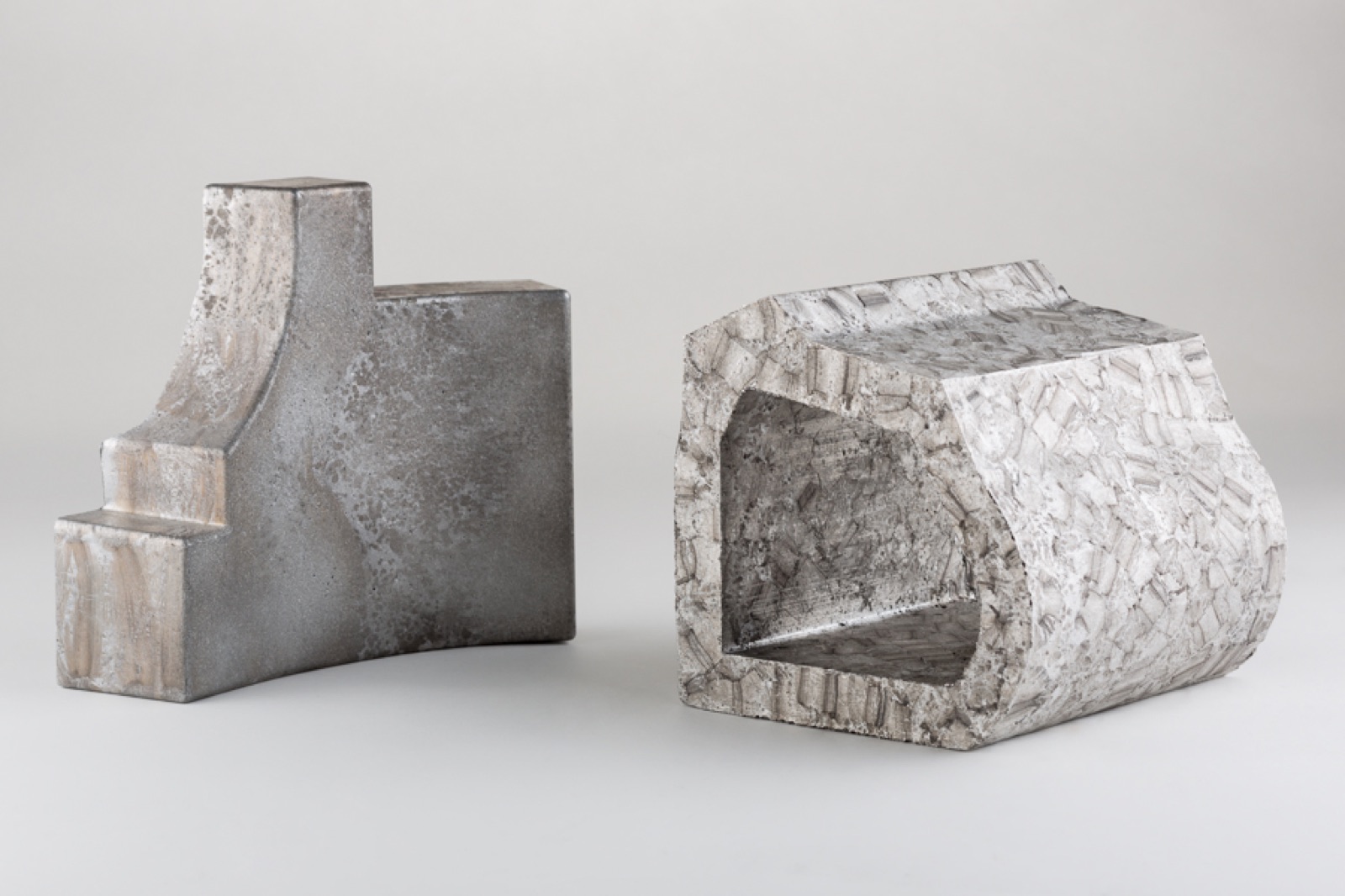
Havel Lite® comprises four product forms of aluminum foam in series production: sandwiches, panels, foamed components and 3D shaped elements. Sandwiches combine the foam core with steel cover layers (Havel Lite SAS) or aluminum cover layers (Havel Lite AAS). Panels are plain aluminum foam plates, which can be made as thin as a few millimeters. Foamed components have excellent damping properties combined with a reduction in weight. 3D shaped elements are made by the powder metallurgical process, which, much like casting, can create almost any geometric shape.
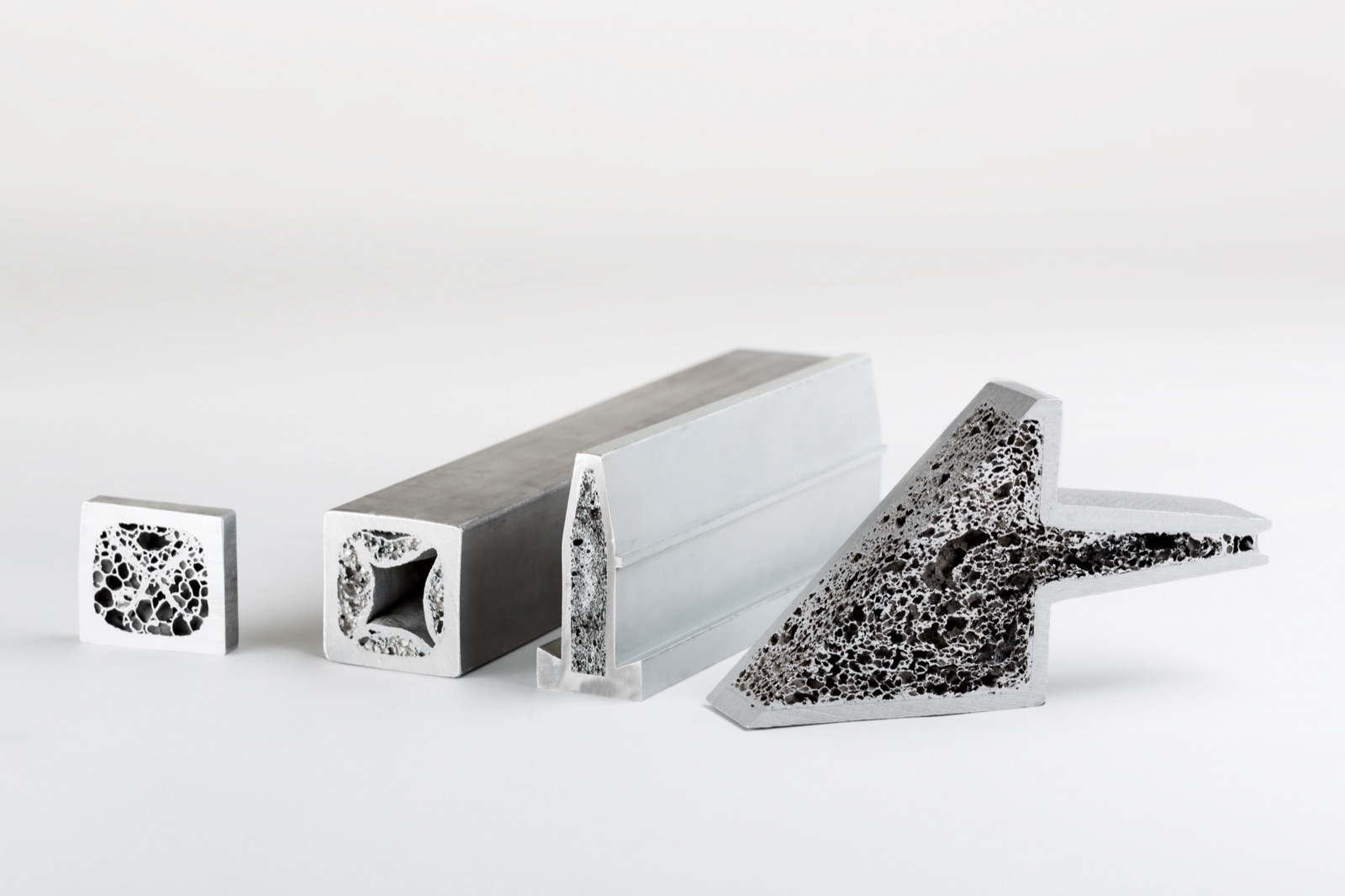
- Havel Lite® sandwiches (SAS and AAS): aluminum foam bonded to steel or aluminum cover layers
- Havel Lite® aluminum foam panels: plain foam plates, from a few millimeters thick
- Havel Lite® foamed components: excellent damping combined with a reduction in weight
- Havel Lite® 3D shaped elements: almost any geometric shape by the powder metallurgical process
What is at the core of Havel Lite® products?
At the core of Havel Lite® products is the extremely light and particularly stable aluminum foam, with densities from 0.5 g/cm³. Straight after foaming, the foam has a closed casting or foam skin; the pores only become visible after machining. As a construction material, aluminum foam has remarkable properties: above all its feather-light weight, its formability, its recyclability and its excellent absorption and conductivity make it an all-rounder with a wide range of possible applications.
How does Havel metal foam produce its products in series?
Havel metal foam runs four different aluminum foam technologies in series production, even in larger quantities, with reproducible product quality. The technical equipment includes infrared furnaces, electrically heated continuous furnaces and CNC milling machines. Everything produced can afterwards be processed in many ways: bending, welding, milling, drilling and machining.
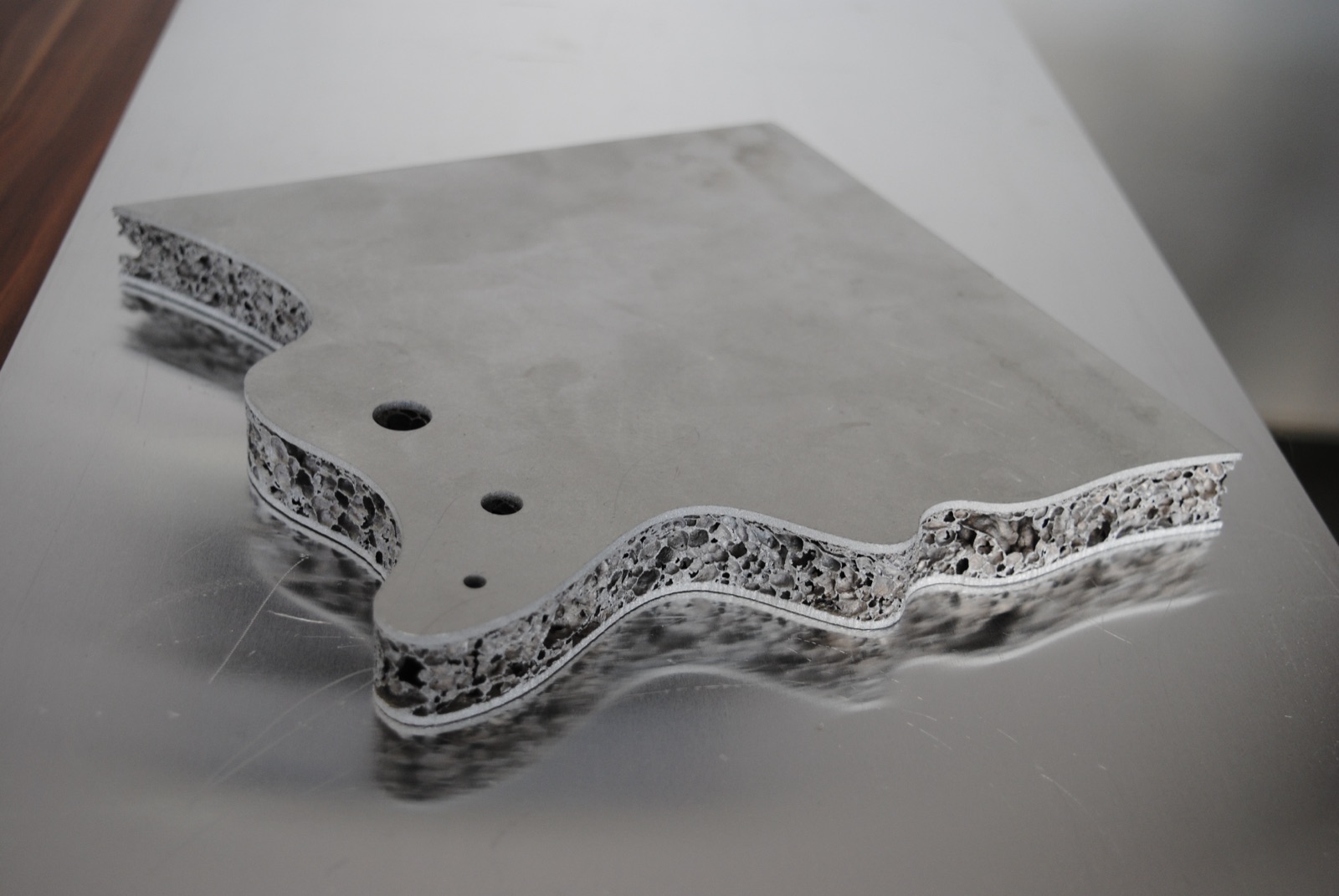
The production capacity is 500,000 m² a year.
Which ready-to-install product solutions does Havel metal foam offer?
Alongside the four basic forms, Havel metal foam develops ready-to-install, customer-specific product solutions: the battery box for electric vehicles, made entirely of aluminum foam sandwiches; the certified truck underrun protection MF UFS G1 in a steel-aluminum foam hybrid design; complex 3D sandwiches to customer drawings; and the open-cell aluminum foam Havellux® for design and architecture. From a part made to drawing through to series production, everything is done in-house.
Are there zinc foam versions of the product forms?
Yes. Zinc can be foamed too. Havel metal foam can foam thin aluminum tubes up to 6 m long, profiles and 3D profiles, and also supplies sandwiches and panels in zinc foam. The advantage of zinc foam: particularly thin outer walls of profiles and tubes can be used.
Choosing the product form
Which product form suits which task?
Also asked: Do I need a sandwich or a panel? · How do I choose between the four product forms?
Havel metal foam has four product forms in series production, and the choice depends on what the component has to do. For a flat, load-bearing surface, the answer is a sandwich: AAS with aluminum cover layers is the lighter design, SAS with steel cover layers the stiffer one and the only one into which fastening points can be foamed or welded. If the task is a surface without cover layers, for absorption or as a core, for example, the panel is the right choice. If an existing hollow profile is to be damped and stabilized, it is foam-filled, even after manufacture. And where the geometry is three-dimensional, the result is a 3D shaped element, close to its final shape and without a weld seam.
- Sources
- Brand content
What do SAS and AAS stand for?
Also asked: What do the two sandwich abbreviations mean? · Which design has which name?
SAS and AAS are the two sandwich designs of Havel metal foam. SAS stands for the aluminum foam core between steel cover layers, AAS for the same core between aluminum cover layers. Both are metallically bonded and need no adhesive, because the foam grows against the cover layer as it foams. The core is the same material in both cases; what differs is the cover layer material, the available thickness and the maximum format. There is no third abbreviation for a further design.
- Sources
- Brand content
Are finished components available instead of semi-finished products?
Also asked: Are complete products supplied too? · Do I have to do the design myself?
Yes. Alongside the four product forms, Havel metal foam develops ready-to-install, customer-specific solutions. Examples are the battery box for electric vehicles, made entirely of aluminum foam sandwiches; the truck underrun protection MF UFS G1 in a steel-aluminum foam hybrid design; shaped 3D sandwiches to customer drawings; and the open-cell Havellux® for design and architecture. From a part made to drawing through to series production, everything stays in-house. The evidence available for each of these products is given on its own product page.
- Sources
- Brand content
Series production and surfaces
How far has a given component been developed?
Also asked: Is it series production or a prototype? · Which stages of maturity are there?
Havel metal foam places components on a ladder of four stages: study, prototype, pilot series and small series. The stages describe how far a part has been developed, and for procurement they are the decisive information, because they say whether a geometry has been built before. Havel metal foam answers on inquiry which stage a particular component has reached. The four product forms themselves are in series production.
- Sources
- Brand content
Can the cover layers be coated?
Also asked: Which surfaces are possible? · Can a sandwich be given a decorative finish?
Yes. The cover layers of Havel metal foam sandwiches can be coated, and the list goes further than paint: paint, marble, wood and wallpaper are named as coatings. This turns a load-bearing lightweight element into a visible surface without a second structure having to be placed in front of it. For architecture and interior fit-out, that is why a sandwich becomes an option instead of a substructure with cladding.
- Sources
- Brand content
Other materials
Are the product forms also available in zinc foam?
Also asked: Is zinc foamed too? · What does zinc foam offer over aluminum foam?
Yes. Zinc can be foamed too, and Havel metal foam can foam thin aluminum tubes up to 6 m long, profiles and 3D profiles, and also supplies sandwiches and panels in zinc foam. The stated advantage is a design one: particularly thin outer walls of profiles and tubes can be used. There are no material values for zinc foam, so design work here goes through an inquiry, not a data sheet.
- Sources
- Brand content
Is there also an open-cell aluminum foam?
Also asked: Is the foam always closed-cell? · Which product has open pores?
Yes. Alongside the closed-cell material from which all four product forms are made, Havel metal foam offers the open-cell Havellux® for design and architecture. The difference is not cosmetic: open pores let light and air through and so change the purpose from load-bearing to decorative. The properties of the closed-cell foam, such as the corrosion resistance that comes from the sealed cells, do not apply to the open-cell variant; there are no separate material values for it.
- Sources
- Brand content
Which product suits your application?
Describe your project, and a specialist will reply.
- Prompt reply
- No account needed
- Your data stays confidential