
Aluminum foam
Aluminum foam is a metallic lightweight material: aluminum is foamed by gas inclusions and so reaches a density from 0.5 g/cm³. That makes it lighter than water while it remains a stable, rigid material. Havel metal foam develops and produces aluminum foam and aluminum foam sandwiches in series, with a manufacturing technology developed together with the Fraunhofer Institute for Machine Tools and Forming Technology IWU.
Updated:
What is aluminum foam, and what is it not?
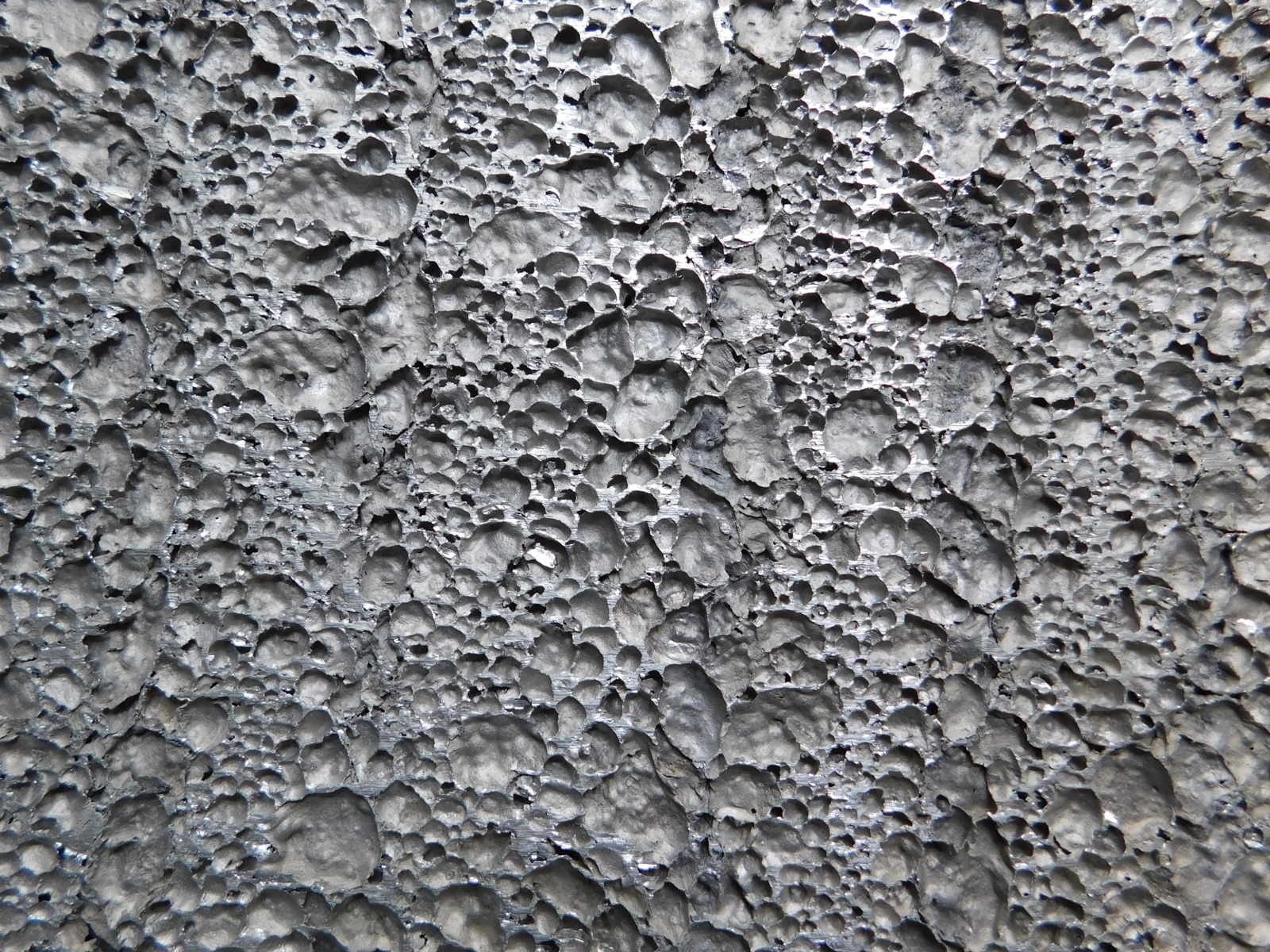
Aluminum foam is foamed aluminum: a closed-cell metal foam whose cellular structure consists of randomly distributed cavities, following the example of bone, coral and wood. It is not a honeycomb structure and not a polymer foam: the cells are distributed irregularly and are entirely metallic, with no adhesives or plastics. The result is a very light material with remarkable stiffness and stability.
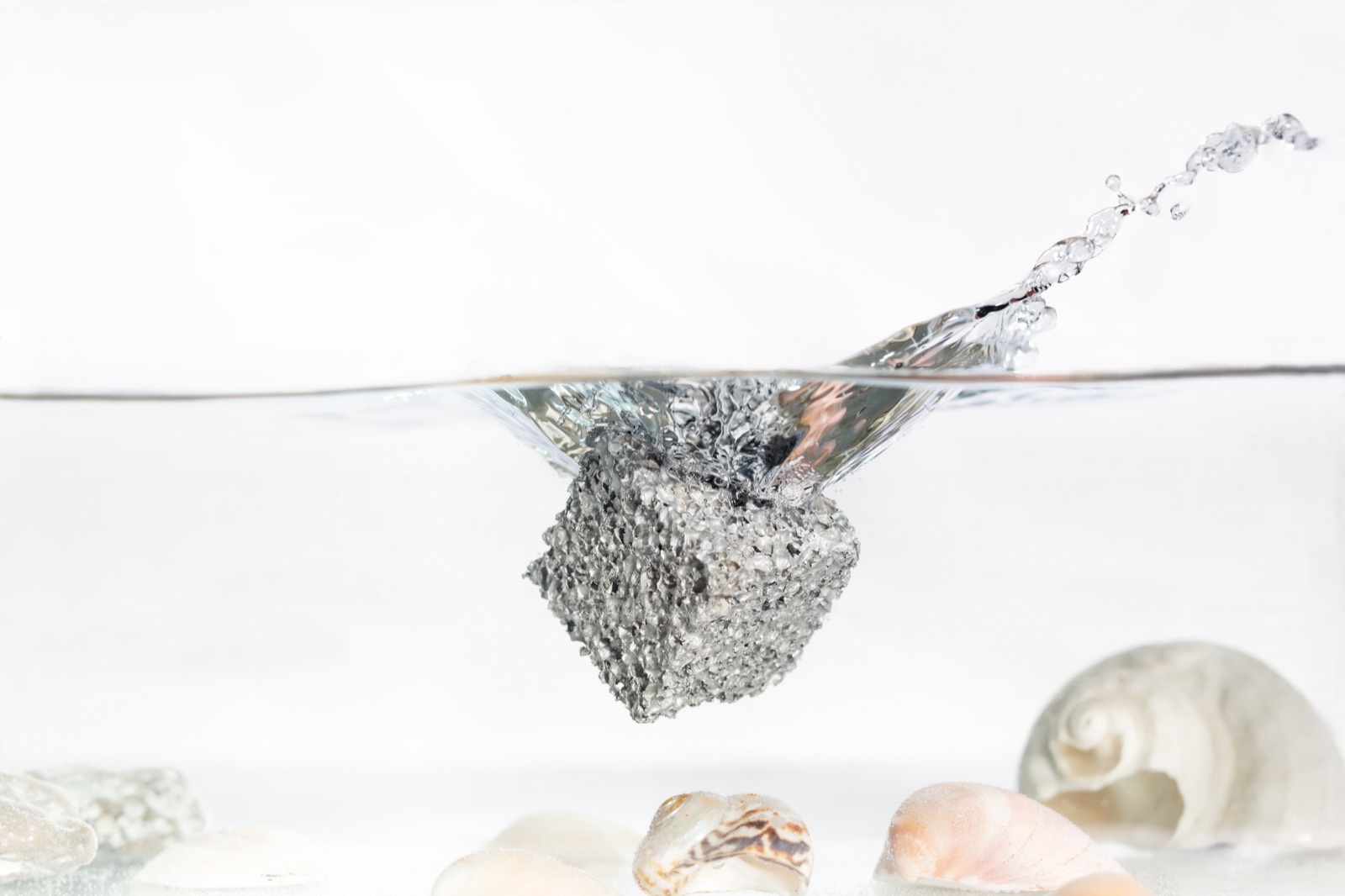
Solid aluminum has a density of 2.7 g/cm³; as a foam the material reaches densities from 0.5 g/cm³ and therefore floats in water.
Which properties make aluminum foam interesting for lightweight construction?
Aluminum foam combines low weight with high mechanical load capacity and brings four functional properties which, in combination, make entirely new, cost-efficient industrial solutions possible: energy absorption, sound insulation, non-flammability and high thermal conductivity. The material realizes its full potential precisely when several of these properties come together in one application.
- Energy absorption
- Absorbs pressure and impact loads and prevents material failure (cracks, fractures), which increases the safety and repairability of components.
- Sound insulation
- Sound waves are effectively damped as they pass through; the density and thickness of the foam determine the result. Resonance behavior in acoustic systems improves considerably.
- Non-combustible
- A purely metallic aluminum structure with no adhesives or plastics. The product data sheet gives an operating temperature range of −20 to 200 °C without any impairment of its properties, and 600 °C as the maximum temperature.
- Thermal conductivity
- Among the best metallic heat conductors, usable in cooling and heating systems alike.
Is the aluminum foam open-cell or closed-cell?
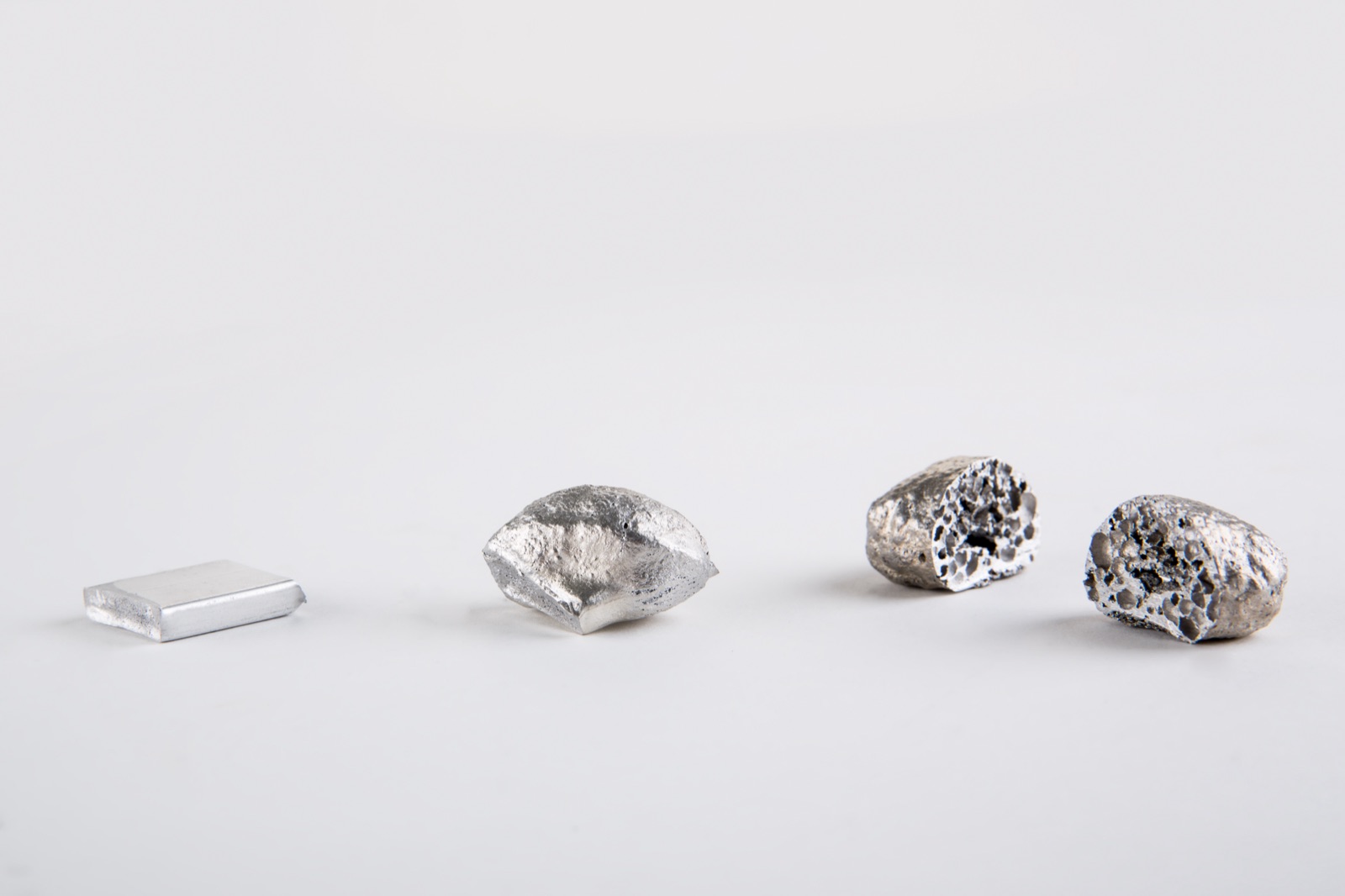
Closed-cell. That follows from the production route: Havel metal foam foams a solid precursor, not a melt. For the application, more depends on this than a description of the material. Straight after foaming, the foam has a closed casting or foam skin; the pores only become visible after machining. Closed cells take up hardly any water, and the foam can be bonded metallically to a cover layer during foaming, because it grows against it. Only that makes the sandwich possible, and because no adhesive is involved, the composite stays single-material and fully recyclable.
How much weight does aluminum foam save compared with steel and aluminum?
A plate of 1,000 × 1,000 × 10 mm³ weighs 5 to 8 kg as aluminum foam; the same plate weighs 78.5 kg in steel (S235JR) and 27 kg in solid aluminum (EN-AW 5754). As an aluminum foam sandwich AAS 10-1-1 (1 mm aluminum cover layers, foam core 0.7 g/cm³) it comes to about 11 kg. The density of the foam is 0.5 to 0.8 g/cm³, depending on the mechanical design required. The standard is 0.6 to 0.7 g/cm³, and 0.5 to 0.8 g/cm³ is produced as a matter of course; higher densities by arrangement and after prior testing.
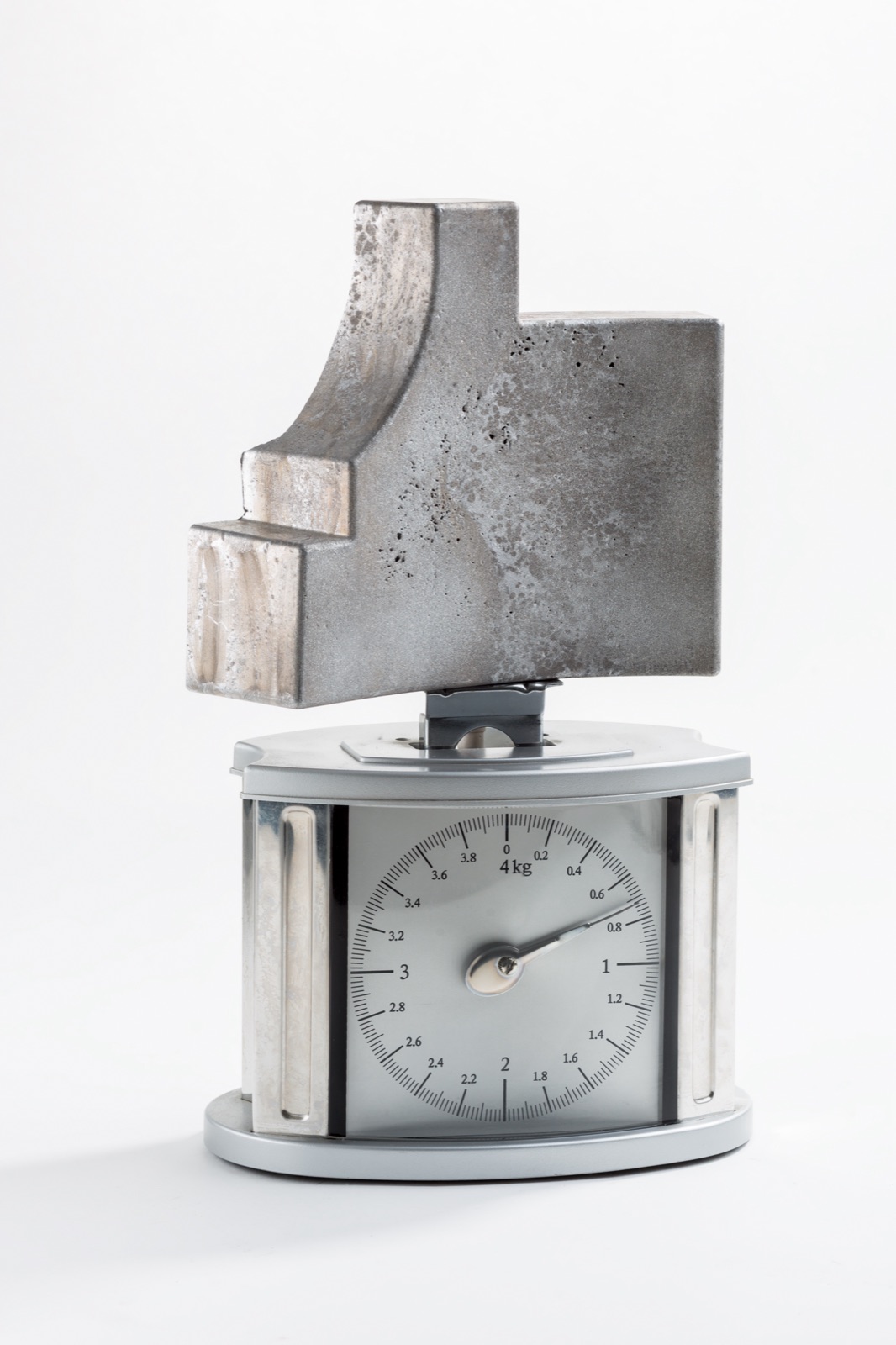
Values according to Tabellenbuch Metall (43rd edition, 2005) and the Fraunhofer Institute for Machine Tools and Forming Technology IWU, the sandwich weight for the standard configuration AAS 10-1-1; calculated estimates, to be verified for specific applications.
In which forms is aluminum foam produced?
Havel metal foam produces aluminum foam in series production in four product forms: as aluminum foam panels, as sandwiches with aluminum or steel cover layers (Havel Lite® AAS and SAS), as foamed profiles and components, and as 3D shaped elements.
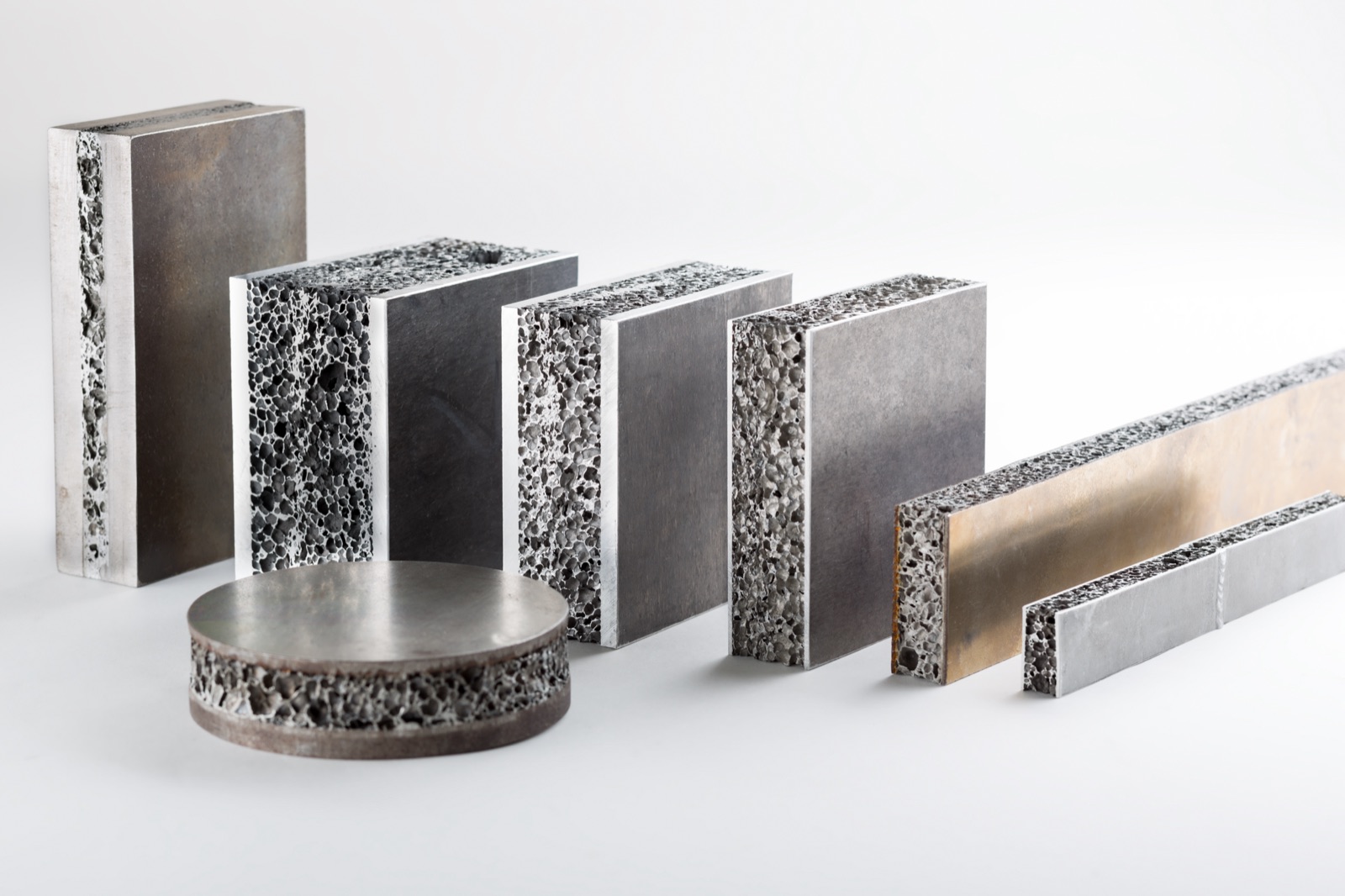
- Aluminum foam panels: flat foam without cover layers
- Sandwiches (Havel Lite® AAS/SAS): a foam core bonded metallically to aluminum or steel cover layers
- Foamed profiles & components: cavities are foamed directly
- 3D shaped elements: three-dimensionally shaped foam elements
Composition and structure
What is aluminum foam?
Also asked: What is aluminum foam made of? · Is aluminum foam the same as a honeycomb structure?
Aluminum foam from Havel metal foam is foamed aluminum: a closed-cell metal foam whose cavities are randomly distributed, following the example of bone, coral and wood. The core alloy is AlSi10, that is, about 90 % aluminum and 10 % silicon. It is not a honeycomb structure, because the cells are distributed irregularly rather than arranged in a regular pattern, and it is not a polymer foam either: the material is entirely metallic, with no adhesives or plastics. Solid aluminum has a density of 2.7 g/cm³; the foam lies at 0.5 to 0.8 g/cm³.
- Sources
- Brand content
Why does the closed-cell structure matter?
Also asked: What follows from closed pores? · Is the foam open-cell or closed-cell?
The closed cells carry two properties on which the Havel metal foam material is built. First, no liquid gets in: foaming forms a thin oxide layer, the pores stay sealed, and so corrosion cannot start inside the material. Second, the foam can be bonded metallically to a cover layer during foaming, because it grows against it; that is what makes the AAS and SAS sandwich designs possible without an adhesive step. Both follow from the production route, because what is foamed is a solid precursor, not a melt. Processes that foam from the melt produce open-cell foam.
- Sources
- Brand content
Does aluminum foam float on water?
Also asked: How heavy is aluminum foam? · What is the density of aluminum foam?
Yes. With a density of 0.5 to 0.8 g/cm³, aluminum foam from Havel metal foam is below the density of water at 1.0 g/cm³ and therefore floats. Solid aluminum, at 2.7 g/cm³, weighs more than three times as much. The density is not a material constant but is chosen during design: it sets the stiffness, compressive strength and thermal conductivity of the core. The full table of values for each density grade is on the Material values page.
- Sources
- Brand content
In which forms is aluminum foam supplied?
Also asked: Which product forms are available? · Is aluminum foam also available without cover layers?
Havel metal foam produces the material in four product forms in series production: as a panel of pure foam without cover layers, as the core of a sandwich with aluminum or steel cover layers (the AAS and SAS designs), as a filling in hollow profiles and cavities, and as a three-dimensional shaped element. In all four cases it is the same material, only in a different geometry; density and alloy are chosen for each application. Which form is right depends on the component geometry and on whether a load-bearing cover layer is needed.
- Sources
- Brand content
Fire behavior and temperature
Is aluminum foam flammable?
Also asked: Does aluminum foam add to the fire load? · Which fire test was carried out?
No. Aluminum foam from Havel metal foam is purely metallic, with no plastics and no adhesives, so there is no combustible component. Material testing of AAS and SAS to DIN EN 45545-2 resulted in classification as HL3; no certificate was applied for. What was tested are the two sandwich designs, not the foam as a material on its own. The material does not add to the fire load, and in rail, shipbuilding and construction that is the real reason for the question.
- Sources
- Brand content
What temperature range can aluminum foam withstand?
Also asked: Up to what temperature can the material be used? · What is the maximum temperature?
The AAS product data sheet gives an operating temperature range for aluminum foam from Havel metal foam of −20 to 200 °C without any impairment of its properties, and 600 °C as the maximum temperature. The upper value is a limit, not an operating point: above 200 °C the assurance of unchanged properties no longer applies. The values in the data sheets are analytically determined guideline values; for a specific component they are determined for the application, and that applies all the more to use at elevated temperature.
- Sources
- Brand content
Corrosion and surface
How does aluminum foam behave with regard to corrosion?
Also asked: Does aluminum foam rust? · Is aluminum foam seawater-resistant?
Aluminum foam from Havel metal foam does not corrode from the inside. Foaming forms a thin oxide layer, the pores stay closed, and so no liquid gets into the cells; with no liquid in the material, corrosion has nowhere to start. For use in seawater, seawater-resistant alloys are also available. The only vulnerable areas are machined surfaces where a cut has opened cells, and these surfaces are sealed before use.
- Sources
- Brand content
How are open pores at cut edges sealed?
Also asked: What happens at a milled edge? · Does a cut edge need to be treated?
Havel metal foam seals a machined surface in one of three ways: welding the side faces, sealing with an aluminum filler, or painting. This is needed wherever a cut, a drilled hole or milling has opened cells, because there the material loses the protection that the closed-cell structure gives it when intact. Which of the three ways is chosen depends on the component and its environment and is decided during design.
- Sources
- Brand content
Is aluminum foam available with a closed surface?
Also asked: What is a panel with a cast skin? · Is a smooth outer surface possible without a cover layer?
Yes, and that is the state straight after foaming: the foam then has a closed casting or foam skin, and the pores only become visible after machining. Havel metal foam supplies a variant as a pure foam panel with an aluminum cast skin as its outer layer, that is, with a closed surface and no added cover layers. For 3D shaped elements the same design is made as a foam core with a cast-on skin. The cast skin is the alternative to the sandwich when a smooth, load-bearing outer surface is needed but the component does not need two load-bearing cover layers. There is no separate data sheet with thickness range and formats for this variant yet; dimensions are agreed for each inquiry.
- Sources
- Brand content
Sustainability and reinforcement
Is aluminum foam recyclable?
Also asked: How sustainable is aluminum foam? · Can the sandwich composite be separated?
Yes, 100 %. Havel metal foam uses no adhesives, so the material remains a single, unmixed metal and goes entirely into aluminum recycling. That sets it apart from the fiber-reinforced lightweight materials it competes with: CFRP and GFRP also combine low weight with high stiffness, but they can hardly be separated and are therefore hardly recyclable. The sandwich composite also stays single-material, because the foam bonds metallically to the cover layer and there is no adhesive step.
- Sources
- Brand content
How can the tensile strength of the foam be increased?
Also asked: Can the foam be reinforced? · What does a foamed-in steel mesh achieve?
For this, Havel metal foam foams a steel wire mesh into the material. The mesh increases the tensile strength of the aluminum foam and at the same time makes it less brittle, because a cell structure that starts to crack remains supported by the mesh. The reinforcement is used where a component takes tension rather than compression, since under compression the foam works through plastic deformation anyway. There is no general figure for the gain; it is determined for the specific mesh specification during design.
- Sources
- Brand content
Inquire about your component in 2 minutes
Straight to the specialist team, without going through sales.
- Prompt reply
- No account needed
- Your data stays confidential