
Aluminum foam in the railway industry & infrastructure
The energy saving potential of up to 30 percent compared with plain steel plates is particularly significant in rail transport. Sandwich construction makes heavy locomotives lighter: less weight means less energy has to be spent to move something. That lowers energy consumption, increases efficiency and leads to fewer emissions. Aluminum foam sandwiches are non-combustible (DIN EN 45545-2: classified HL3) and bring an 18 % weight saving.
Updated:
What are the advantages of aluminum foam in rail vehicle construction?
In the body shell, aluminum foam sandwiches act as self-supporting elements: frames can be omitted, which saves space. The material is formable, weldable and repairable and offers high crash absorption. Together with an 18 % weight saving and the energy saving potential of up to 30 percent compared with plain steel plates, the result is a material system that addresses efficiency, safety and maintenance at the same time.
- Body shell: self-supporting sandwiches
- Can be formed / welded
- Can be repaired
- Saves space / no frames
- High crash absorption
- 18 % weight saving
How has aluminum foam been tested to DIN EN 45545-2 for rail use?
Material testing of AAS and SAS to DIN EN 45545-2, that is, of both sandwich designs (AAS with aluminum cover layers, SAS with steel cover layers), resulted in classification as HL3. Havel metal foam did not apply for a certificate for it. The reason for the test result is the construction itself: the sandwiches are purely metallic, with no plastics and no adhesives, and so add nothing to the fire load. In rail vehicles the material is used for floor panels, ceiling and wall elements, door systems and toilet enclosures, among other things. Havel metal foam provides the test report on request.
Which elements of a rail vehicle are made from aluminum foam?
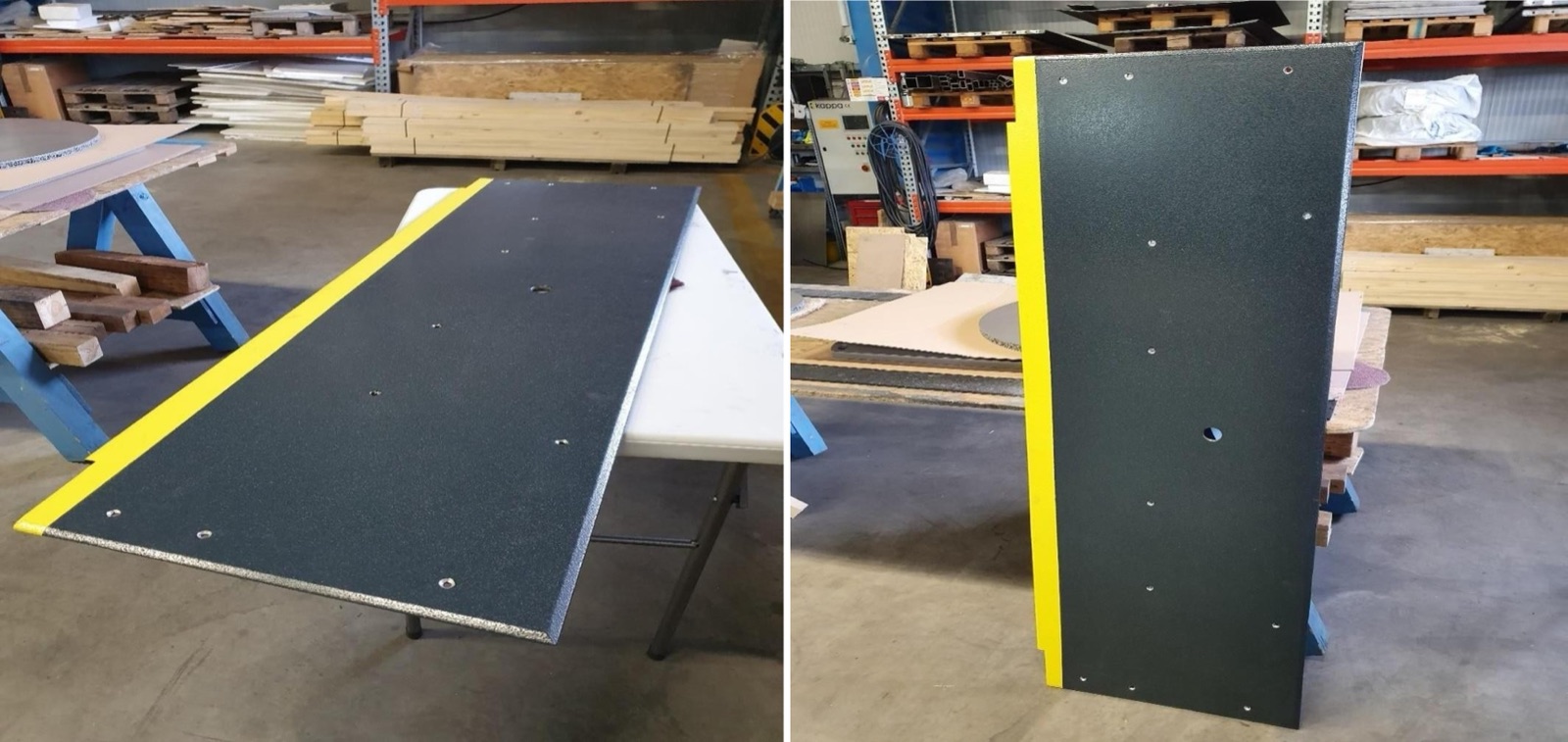
In the vehicle, aluminum foam sandwiches cover flat elements as well as functional ones: floor panels with elements that can be foamed in (pipes, heating systems, etc.), ceiling and wall elements, door systems, seats and tables, toilet enclosures and access ramps for wheelchairs. In wheel housings, aluminum foam sandwiches reduce noise; freight wagons are also among the areas of application.
- Floor panels with elements that can be foamed in (pipes, heating systems, etc.)
- Ceiling and wall elements
- Door systems, seats, tables
- Toilet enclosures
- Access ramps for wheelchairs
- Aluminum foam sandwiches in wheel housings (noise reduction)
- Freight wagons
What do the new aluminum foam floor elements for passenger trains achieve?
The demands are particularly high in entrance areas, whether on metro, regional or long-distance trains: wide doors with extendable (wheelchair) ramps call for large spans in little installation space. Sandwich panels with an aluminum foam core can be installed simply and quickly. Producing them by foaming directly to the final contour minimizes finishing and offcuts and allows smooth transitions between different material thicknesses, so that differences in height are evened out without a step, for maximum comfort when boarding and alighting.
The metallic bond between foam and cover sheet is designed for a service life that matches that of the vehicle.
How do aluminum foam roof elements protect sensitive components?
Aluminum foam sandwich panels were presented at INNOTRANS 2024 as a new approach to protecting sensitive roof-mounted units on railcars. They offer robust protection against external impacts such as falling branches and chunks of ice from trees, masts or bridges, and at the same time improve the acoustic properties of the vehicles: unlike conventional sheet metal elements, the panels shield the noise of the units more effectively, which can noticeably improve ride comfort for passengers and the working environment for train crews.
Can complex structural components such as a power car hood be made as well?
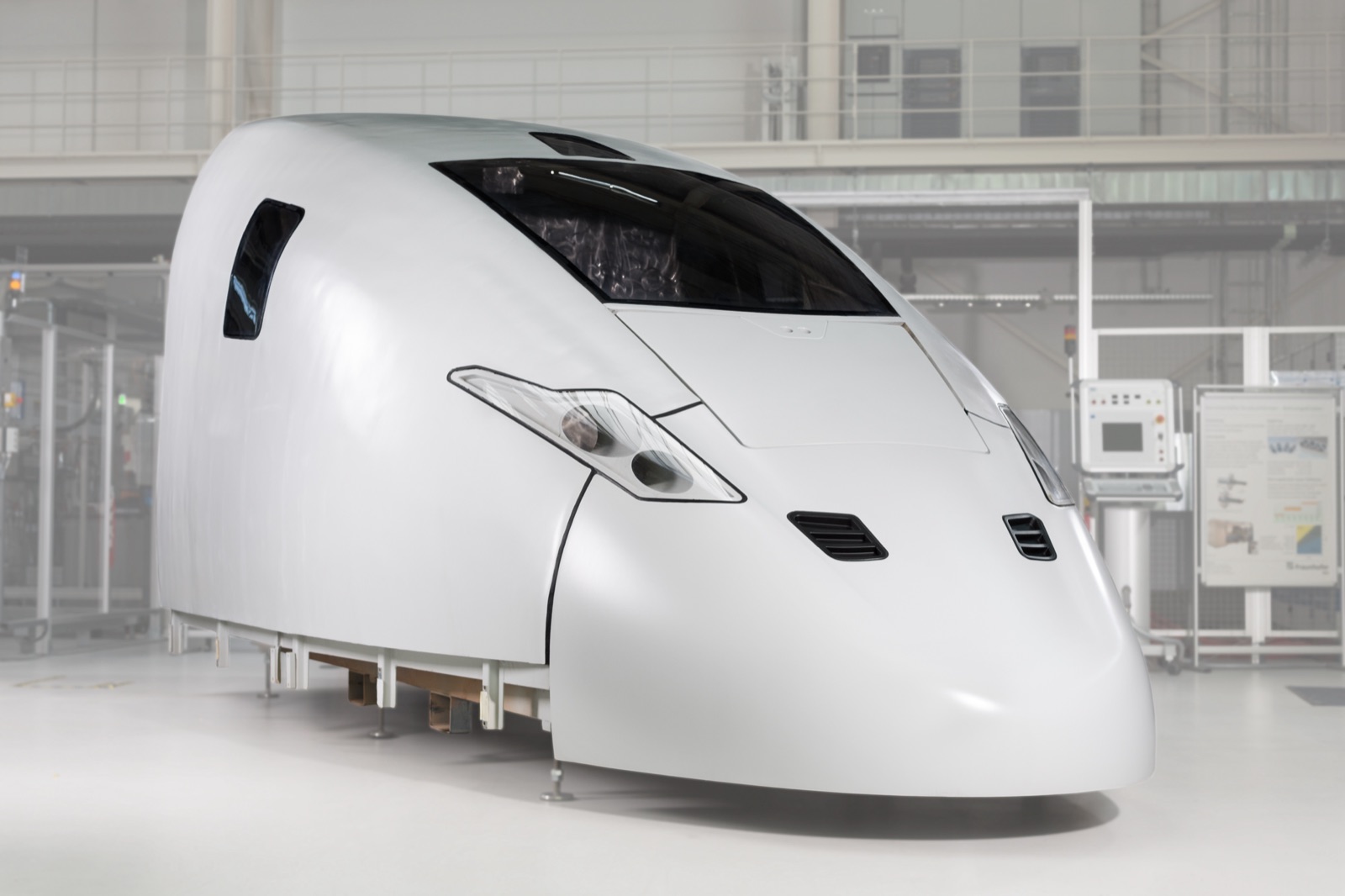
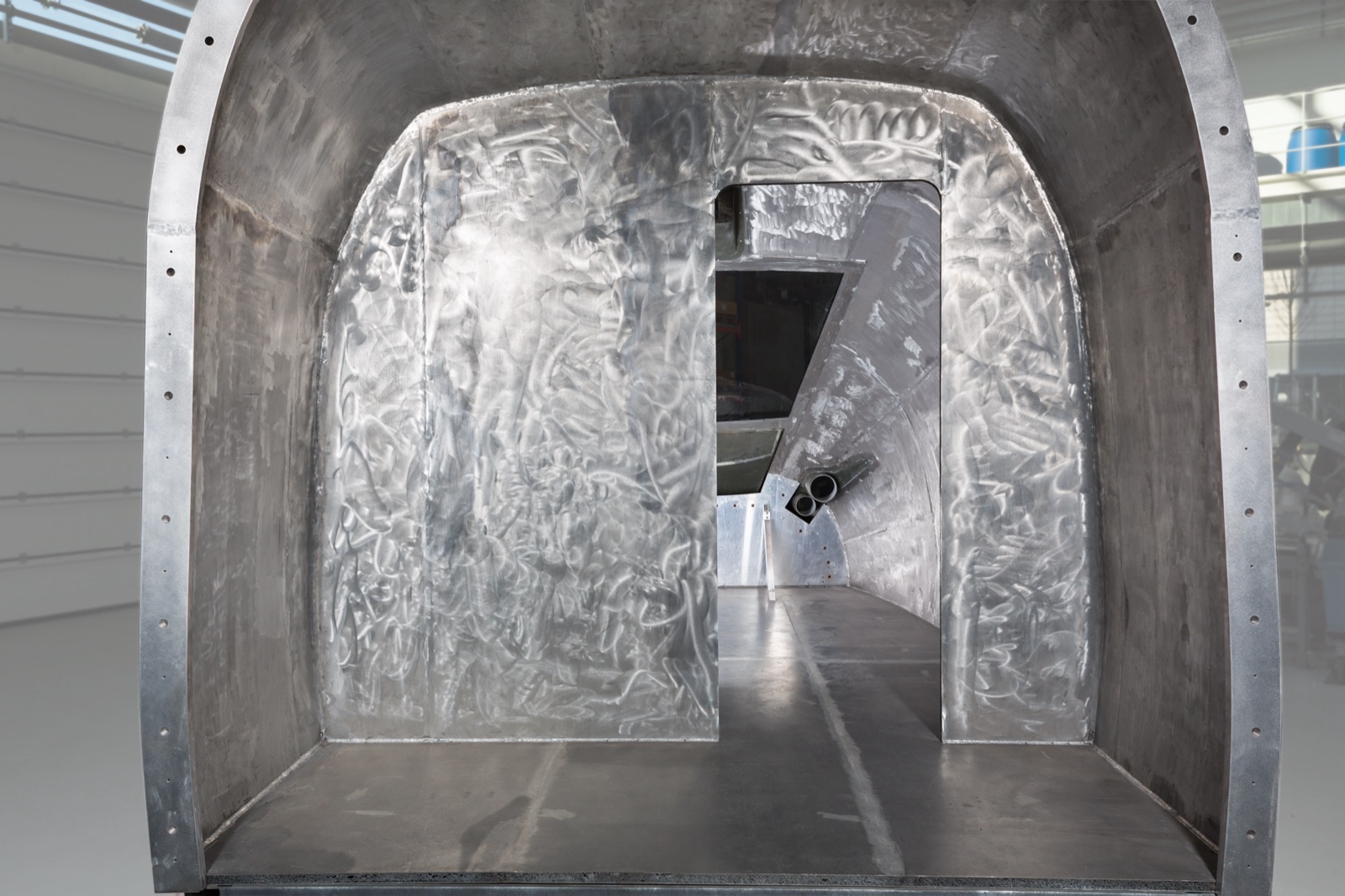
Yes. The power car hood of an express train in aluminum foam was investigated as a project study. The participants were the Fraunhofer Institute for Machine Tools and Forming Technology IWU, BlueS, KUKA Systems GmbH, MFPA Leipzig GmbH and Voith Engineering Services GmbH Road & Rail. The material allows various joining techniques, welding and individual shaping.
What is aluminum foam used for in transport infrastructure?
On motorways and at roadworks, aluminum foam damping elements are used between the crash barrier and its mounting posts: absorbing the crash energy minimizes damage to vehicles and saves repair costs on the crash barriers. Beyond that, the aluminum foam products can be used for crash protection, visual screening, noise protection and fire and explosion protection, for example as rapid protection in security-related operations, as screening at accidents, at mobile checkpoints or as noise protection at mobile roadworks.
Fire behavior and test records
What fire test record exists for rail use?
Also asked: Has the material been tested to DIN EN 45545-2? · Is there a fire protection certificate for rail vehicles?
Material testing of AAS and SAS to DIN EN 45545-2 resulted in classification as HL3; no certificate was applied for. Havel metal foam therefore holds a test result for both sandwich designs, and no certificate of conformity. The reason the result was to be expected lies in the construction: the sandwiches are purely metallic, with no plastics and no adhesives, so there is no combustible constituent and nothing is added to the fire load. Customers nevertheless often ask for the test, which is why it was carried out.
- Sources
- Brand content
Which hazard level under EN 45545 is documented?
Also asked: Has a hazard level under EN 45545 been determined? · Which hazard level was established?
HL3. Material testing of AAS and SAS to DIN EN 45545-2 resulted in classification as HL3 for the Havel metal foam sandwiches; no certificate was applied for. The hazard level is therefore a test result for both sandwich designs and not a certificate of conformity. If you need to document the classification for a vehicle project, you receive the test report through an inquiry.
- Sources
- Brand content
Weight and components
How much weight does an aluminum foam front module save?
Also asked: What did the power car hood weigh before and after? · Has a front module been built?
A power car hood made of formed and welded aluminum foam sandwiches from Havel metal foam, combined with GRP components, comes to 1.4 t, against 1.7 t in the conventional aluminum and steel construction. That is 18 % less weight, with 18 % more usable space at the same time. The component was created in a project study with five partners: Fraunhofer IWU, BlueS, KUKA Systems GmbH, MFPA Leipzig GmbH and Voith Engineering Services GmbH Road & Rail. It is a hybrid of metal foam sandwich and fiber composite, not a pure sandwich component.
- Sources
- Brand content
How light is an aluminum foam train table?
Also asked: What does a table in a rail vehicle weigh? · How is a train table constructed?
A train table from Havel metal foam weighs around 11 kg, which corresponds to a weight saving of 40 %. It consists of a 2 mm cover layer over an 11 to 21 mm foam core. The table is the clearest example of how weight is saved in the interior, because it carries no structure and is still fitted several times in every carriage; the saving therefore multiplies with the number of units rather than with the size of the component.
- Sources
- Brand content
What do foamed stair steps achieve in a double-deck carriage?
Also asked: How are stairs for double-deck trains made? · Does the foam replace additional acoustic materials?
For stairs in double-deck carriages, Havel metal foam foams the individual steps, which removes weld seams and reduces weight. The decisive side effect is acoustic: the steps absorb sound, so no additional acoustic material has to be fitted. This is where the material replaces two items on the bill of materials rather than one, and that is exactly where its use in the interior pays off.
- Sources
- Brand content
Design
Can load-bearing frames be omitted?
Also asked: Does the sandwich replace the stiffening? · What does a self-supporting wall achieve?
Yes. Self-supporting aluminum foam sandwiches from Havel metal foam allow frames to be omitted in the body shell, and the gain is not only weight but space: where no stiffening projects inwards, the usable profile grows. For design purposes, you cannot simply swap sheet for sandwich; the stiffening structure has to be considered too, and only then is the actual saving known.
- Sources
- Brand content
Can pipework and heating be integrated into the floor?
Also asked: Can pipes be foamed in? · What goes into a floor element?
Yes. Havel metal foam makes floor panels with foamed-in elements, such as pipes and heating systems, so that function and structure lie in one component. Further applications in the vehicle are door systems, seats, tables, toilet modules, decorative and interior fit-out elements, wheelchair ramps, sandwiches in wheel housings for noise reduction, and ceiling, wall and partition elements; freight wagons are a further application. For the interior fit-out, foaming in is the point at which a substructure is no longer needed.
- Sources
- Brand content
Aluminum foam for your rail vehicle
Straight to our specialist team, without going through sales.
- Prompt reply
- No account needed
- Your data stays confidential